Infrared Gas Burner: How It Works, and How to Keep It Clean
7 min read
An infrared gas burner is the red-glowing plate that has replaced the ring of blue flames on many hobs sold in Malaysia. It burns the same gas as any burner. What changes is where the burning happens and what it heats, and understanding that explains why the burner uses less gas, why it stays lit in wind, why its flame sometimes turns yellow, and how to clean it without wrecking it. This guide covers all four.
Quick Answer: How does an infrared gas burner work?
Gas and air are mixed under a ceramic or metal plate drilled with thousands of tiny ports. The mixture burns just above the plate, the plate heats to a red glow at around 800 to 1,000°C, and the glowing surface radiates heat into the pan the way an electric grill element does. The pan is heated by that radiation plus the hot gases, which is why more of the heat reaches it than with an open flame.
The parts of the burner
- The plate. A disc of ceramic or perforated metal carrying several thousand ports. On VATTI's plate burner the count is nearly ten thousand, and the plate is angled at 13.6 degrees so that gas leaves every port at the same rate and the whole surface glows evenly rather than in patches.
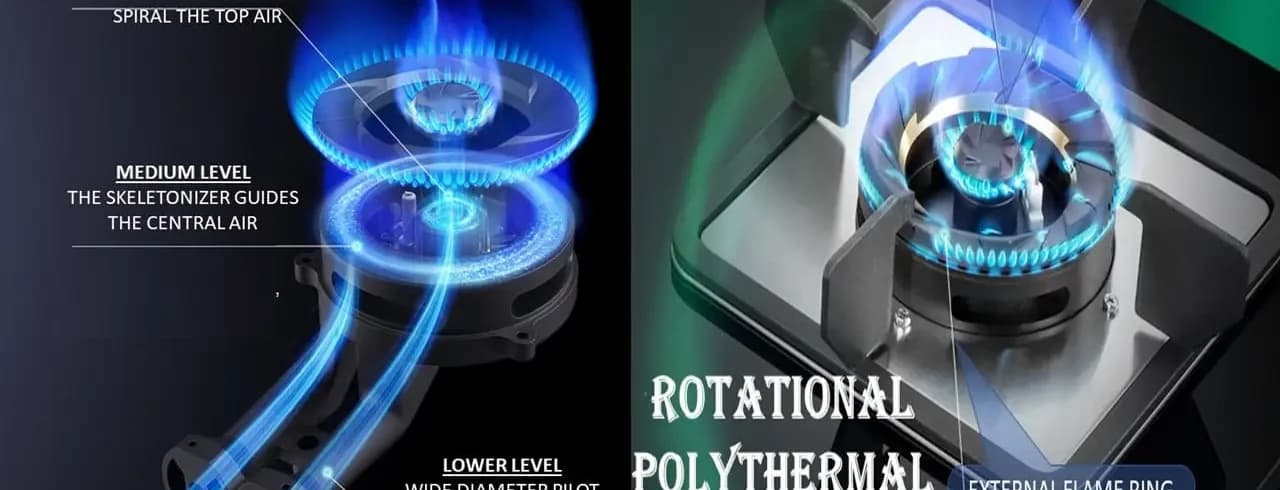
- The mixing chamber. Below the plate, gas from the valve draws in air and the two mix before they reach the ports. Getting enough air into a plate of tiny holes is the hard part of the design; the M822G's burner takes air in through twelve spiral intake slots at the top, a guide for the central air and a wide pilot tube underneath.
- The ignition. A spark from a battery-powered or mains igniter lights the mixture at the plate. Within seconds the surface is glowing.
- The flame failure device. A thermocouple sits in the flame. If the burner goes out, it cools, and the valve closes the gas. Any hob you buy should have one.
- The pan support. Cast iron on most, holding the pan a set height above the plate so the radiant heat reaches the whole base.
Why it glows red
Burning gas right at the surface of a solid heats that surface far hotter than a free flame heats the air around it. At 800 to 1,000°C a ceramic or metal surface glows red and gives off infrared radiation, which travels in straight lines to whatever faces it. A pan sitting above the plate absorbs that radiation across its whole base. That is the difference from an open burner, whose hot gases heat only where they touch and let the rest slip up the sides.
What the flame colour tells you
- A faint blue haze with a steady red glow is correct. The gas is burning completely.
- Yellow or orange tongues of flame mean incomplete burning. Either ports are blocked by a spill, the plate is wet, or the air intake is obstructed. Yellow flame wastes gas and leaves soot on the pan.
- A glow that is bright in patches and dark in others means blocked ports in the dark areas.
- Lifting or flickering flame is usually a pan sitting too close, or a plate that has been fitted loosely after cleaning.
On the open burner beside it, the same rules apply: blue is right, yellow means a blocked port or a wet cap.
Why it uses less gas
With an open burner, the flames heat gas that then flows over the pan, and a good share of that hot gas misses the pan and rises around it. With a plate, the burner's energy first heats the plate and then leaves it as radiation aimed at the pan base, and the hot gases still flow over the pan as well. More of the energy arrives at the pan, so the same cooking needs less gas. Manufacturers typically rate the saving at 10 to 20 percent, most of it at high heat, where an open burner wastes the most. Our guide to whether an infrared gas stove is worth it puts that against the price.
Why it stays lit in wind
The flame sits in and just above the ports rather than standing free in the air, so a draught cannot fold it over or blow it out. Kitchens with a window over the hob, a yard kitchen, or a ceiling fan running are where this is noticed first.
How to clean an infrared gas burner
The plate is the only part that needs care, and the two rules are: never while it is hot, and never with anything that could block a port.
- Let it cool completely. A ceramic plate can crack if cold water or a wet cloth touches it while it glows. Wait until it is dark and cool to the hand.
- Brush, do not scrub. Use a soft dry brush, an old toothbrush or a soft nail brush, and sweep across the plate to clear ash, crumbs and burnt residue from the ports. Do not use a wire brush, a scouring pad or a knife point; they widen and damage the ports.
- Lift a boil-over once it is dry. Dried food comes off with the brush. If it is stubborn, a cloth wrung out in warm soapy water, used lightly on the surface and followed by thorough drying, is as wet as the plate should get.
- Never pour water through it. Water in the ports and the mixing chamber means yellow flame and sputtering until it has dried out, and on some burners it corrodes the chamber.
- Clean the pan support separately. Lift it off and wash it in the sink like any other support. See cleaning stove grates.
- Refit the plate squarely. A plate that sits loose or tilted burns unevenly and can lift the flame.
- Do it monthly, and after any boil-over. A plate kept clear lasts years. One left clogged burns yellow, wastes gas and eventually needs replacing.
When to call for service
- The plate is cracked. Do not use the burner; a cracked plate can let flame through unevenly.
- The flame stays yellow after a thorough clean and drying. The air intake or the injector may be blocked.
- The burner will not light. Check the battery or the plug first; our guide to a gas hob igniter that is not working covers the common causes.
- The plate has lost its even glow permanently. Ports have been damaged and the plate needs replacing, which is a service part from the brand.
VATTI's version of the burner
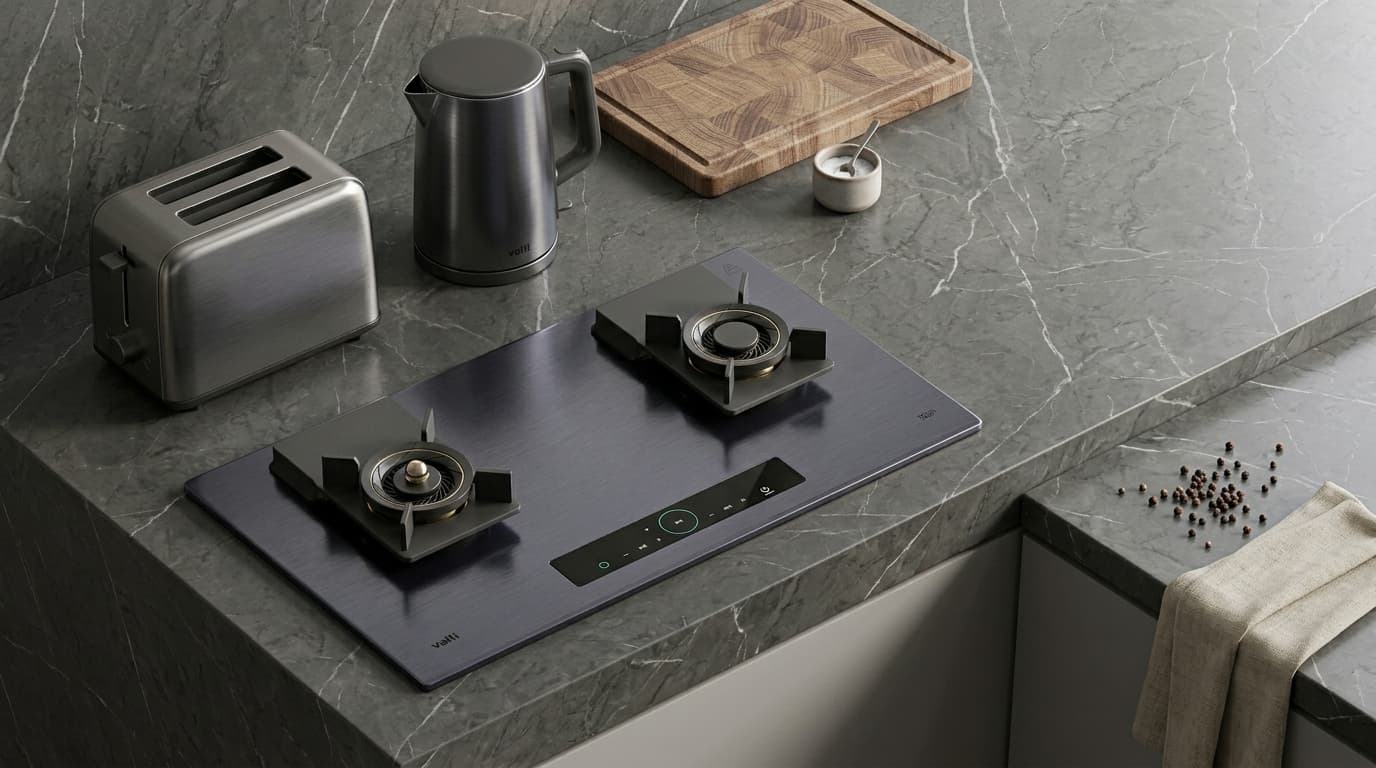
VATTI calls its plate burner micro-flame combustion. It was first built for the Beijing Olympic torch, which had to stay lit in 65 km/h wind and 55 mm of rain an hour, and the same combustion design now sits on the left side of the Olympic Hob M822G: a 3.8 kW plate that reaches 1,000°C, beside a 4.5 kW open burner on the right for the pot. The two sides are partitioned so a wok on one does not disturb a simmer on the other, and the safety valve closes the gas on either if its flame goes out.
Infrared gas burner FAQs
What is an infrared gas burner made of? A ceramic or perforated metal plate over a mixing chamber, with a thermocouple in the flame and a cast iron pan support above.
Does an infrared gas burner need electricity? Only to make the spark. The heat is all gas. It works in a power cut.
Can I put a wok on it? Yes. It is the burner's best use. Use a wok stand for a round-bottomed wok, as on any hob.
Why does my burner smell of gas when lit? It should not. Turn it off and have the hob checked; a smell of gas with the burner lit means gas is escaping unburnt somewhere.
How often should the plate be cleaned? A brush over it once a month, and straight after any boil-over once it has cooled.
Final thoughts
An infrared gas burner is a plate that burns gas at its surface and glows, and everything it does well follows from that: more heat into the pan, less gas, no flame to blow out. Everything it asks of you follows from it too: keep the ports clear and never cool the plate with water. If you are choosing a hob, the VATTI cooker hob range lists each model's burners, and the M822G pairs this burner with an open one.