
How to Clean a Kitchen Hood Filter: Mesh, Baffle and Carbon
6 min read
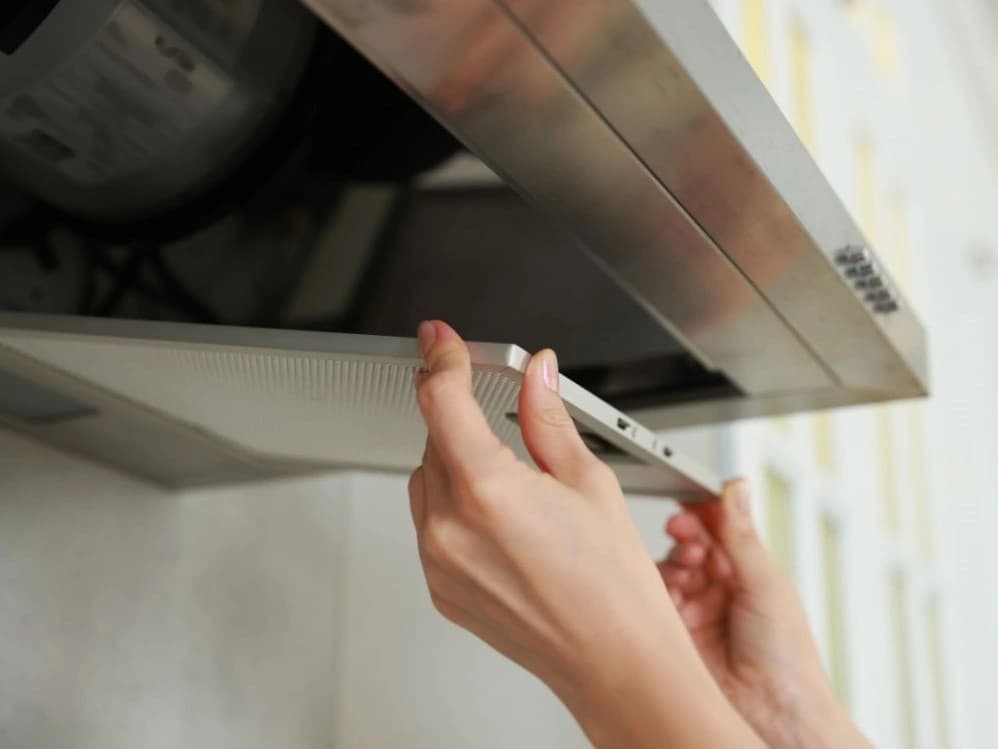
In a Malaysian kitchen the hood filter fills with grease faster than anywhere else in the house. Daily frying and stir-frying send oil mist straight into it, and once the mesh is clogged the hood loses suction, smells start to linger, and the grease itself becomes a fire risk. Cleaning the filter is a 30-minute job and it is the single most useful thing you can do for a cooker hood. This guide explains how, for every filter type, and how often.
Quick Answer: How do you clean a kitchen hood filter?
Switch the hood off, unclip the filter, and soak it in very hot water with a squirt of grease-cutting dish soap and two or three tablespoons of baking soda for 15 to 30 minutes. Scrub the loosened grease off with a soft brush, rinse under warm water, and let it dry completely before clipping it back in. Do this monthly for normal cooking and every two to four weeks for heavy wok cooking.
Why a clean filter matters
- Suction. Grease in the mesh blocks the airflow, and a hood pulling through a clogged filter cannot clear the smoke it was rated for.
- Fire safety. Cooking grease is flammable. A filter caked with it sits directly above the flame.
- Smell. Old grease holds odour. A kitchen that smells of yesterday's cooking usually has a filter that needs washing.
- Motor life. A blocked filter makes the motor work harder for less air, and that is what wears it out early. Grease, not age, is what takes the suction out of most hoods.
Know your filter type first
Aluminium mesh filters are the most common in home hoods: layered mesh in a frame, light, and reusable. They are the type this guide is mostly about.
Stainless steel baffle filters are the angled-plate filters found on heavier and commercial-style hoods. They trap grease by making the air change direction. They clean the same way and take harder scrubbing.
Charcoal or carbon filters are fitted to ductless hoods behind the grease filter. They absorb odour and they cannot be washed. When a carbon filter is spent, the only fix is a new one, every three to six months.
No filter at all. Some hoods separate the oil without a mesh. The VATTI Aetheris V929, for example, lets oil run down a coated glass panel into a cup you empty, and washes its own impeller with a cleaning cycle. If your hood has an oil cup, empty and wash the cup; there is no mesh to soak.
How often to clean a hood filter
| Cooking habit | Clean the filter |
|---|---|
| Light cooking, little frying | Every 2 to 3 months |
| Daily home cooking | Monthly |
| Heavy frying or wok cooking | Every 2 to 4 weeks |
A quick check: hold the filter up to the light. If you cannot see through the mesh, it is overdue.
How to clean a kitchen hood filter, step by step
Step 1: Switch off and remove the filter
Turn the hood off at the switch. Most mesh filters have a spring clip or a latch on the front edge: press it and the filter drops down. Have a tray underneath, because a full filter drips. Gloves help; the edges are sharp and the grease is unpleasant.
Step 2: Soak in hot water, soap and baking soda
Fill the sink or a large basin with water as hot as the tap gives, around 60 to 70°C. Add a good squirt of grease-cutting dish soap and two to three tablespoons of baking soda, then submerge the filter fully. Leave it for 15 to 30 minutes. The heat softens the grease and the baking soda, which is alkaline, breaks it down.
If the filter does not fit the sink, lay it in the bath or a storage box, or do one half at a time.
Step 3: Scrub
Use a soft brush, a non-scratch sponge or an old toothbrush for the corners. After the soak most of the grease lifts with light pressure. Avoid steel wool and stiff brushes: they bend the mesh and scratch the frame.
For a filter that has been neglected for months, drain the basin, sprinkle baking soda straight onto the mesh, scrub, then soak again.
Step 4: Rinse and dry completely
Rinse under warm running water until it runs clear and no suds remain. Then dry the filter fully. Standing it on edge on a towel overnight is safest; a hairdryer on low speeds it up. A filter refitted damp will smell and, on aluminium, can start to corrode.
Step 5: Refit and wipe the hood
Clip the filter back in the way it came out. While it is out, wipe the inside of the hood and the underside with a cloth and the same hot soapy water. Our guide to range hood maintenance covers the rest of the hood.
Can you put a hood filter in the dishwasher?
Often, but check the manual first. Stainless steel baffle filters are dishwasher-safe. Aluminium mesh filters usually are too, but alkaline dishwasher detergent can leave aluminium dull and grey, and a heavily greased filter can clog the dishwasher's own filter. If you use the dishwasher, run the filter on its own on a hot programme and clean the dishwasher filter afterwards. Never put a charcoal filter in.
Hoods that clean themselves
Many current hoods carry an auto-clean cycle. High-temperature steam or a turbo wash runs through the fan chamber and loosens the oil on the impeller before it hardens, which is the part a filter wash never reaches. It does not replace washing the filter, but it does keep the suction from fading between washes. Our guide to what auto-clean is explains how the cycle works.
Hood filter cleaning FAQs
Can I use vinegar to clean a hood filter? Yes, as a second step for light grease. Do not add it to the baking soda soak; the two neutralise each other and you lose both.
Does baking soda really remove grease? Yes. It is alkaline, and alkalis break cooking oil down into compounds that rinse away. It is also mild enough not to harm aluminium.
Can you wash a carbon filter? No. Washing destroys the charcoal's ability to absorb odour. Replace it every three to six months.
Why does the hood still smell after cleaning the filter? Grease inside the fan chamber, a spent charcoal filter on a ductless hood, or grease in the duct itself. An auto-clean cycle handles the first; the second needs a new filter; the third needs a service visit.
How long does it take? About 30 to 45 minutes: 15 to 30 soaking, and 10 to 15 scrubbing and rinsing.
Should I replace an aluminium mesh filter? When the mesh is torn, bent so it no longer sits flat, or corroded. A filter that still fits and washes clean can last the life of the hood.
Final thoughts
A clean filter is what keeps a hood pulling at the airflow it was sold with. Wash it monthly, more often if you fry every day, and let it dry before it goes back. If you are replacing the hood, the VATTI kitchen hood range includes models with auto-clean cycles and one with no mesh filter at all, which are the two ways to make this job smaller.


