
How to Remove Rust From an Electric Stove: Step-by-Step Guide
7 min read
On this page
- Why is my electric stove rusting?
- Before you start
- Where is the rust? Pick the right method
- Method 1: Baking soda paste
- Method 2: Lemon and salt scrub
- Method 3: Vinegar soak and steel wool
- Method 4: Commercial rust remover
- Method 5: Fine sandpaper and oil
- How to stop rust coming back
- Electric stove rust FAQs
- Final thoughts
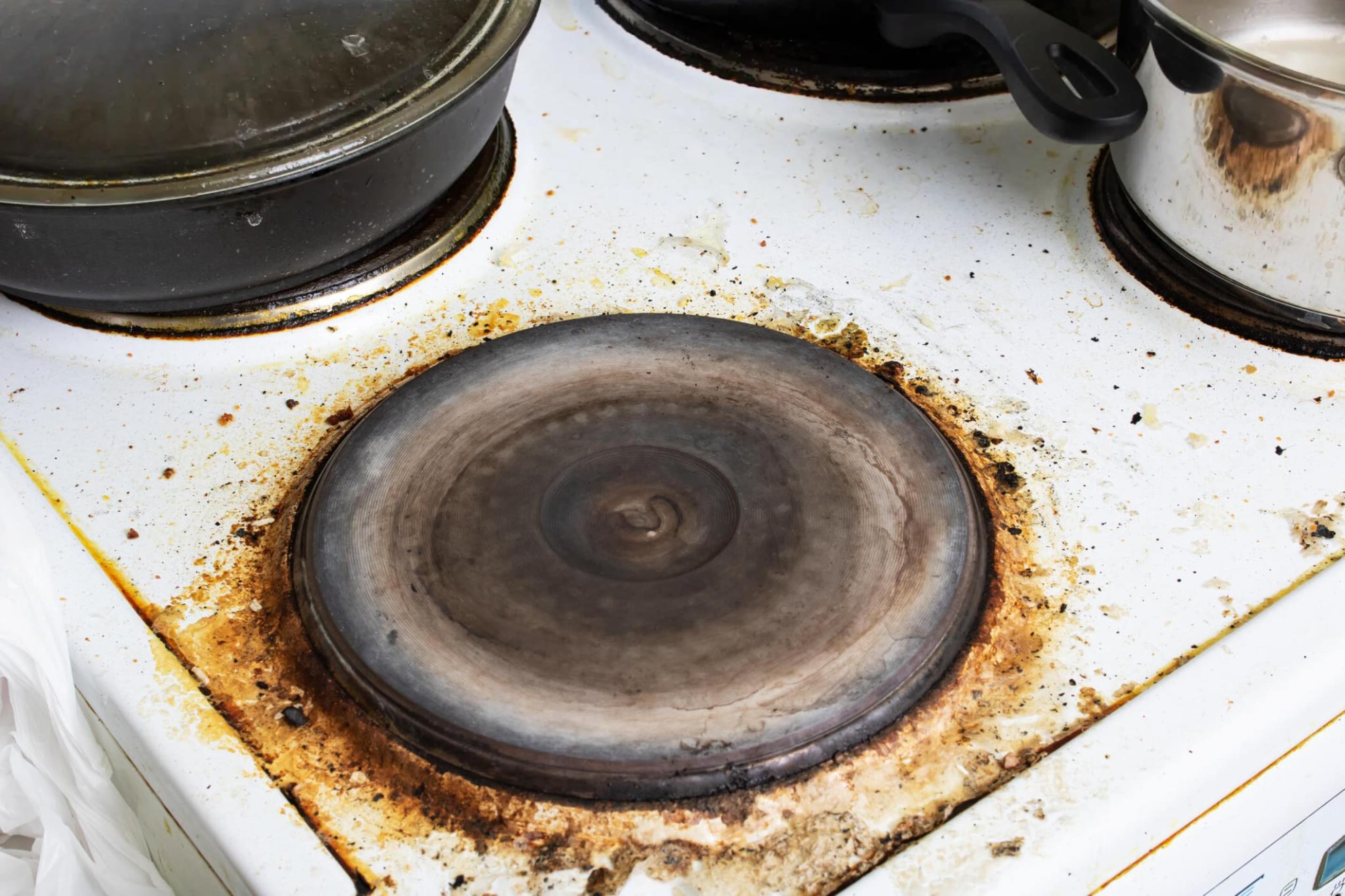
Rust on an electric stove usually shows up in the same few places: the coil burners, the metal drip pans under them, chipped enamel on the stove top, and the trim around the controls. It looks bad and, left alone, it spreads and pits the metal. Most of it comes off with things already in the kitchen. This guide shows you which method suits which part, step by step, and how to stop the rust coming back.
Quick answer
- First step
- Switch the stove off at the wall, let it cool completely, and remove coil burners and drip pans if your stove has them.
- Light rust
- Rub on a paste of baking soda and water, leave it 30 minutes, scrub with a soft brush, rinse and dry.
- Stubborn rust on metal parts
- Soak in white vinegar for an hour or two, then scrub gently with fine steel wool.
- Glass or ceramic tops
- Never use steel wool or sandpaper; use baking soda paste and a soft cloth only.
- Prevent it
- Dry the stove after every clean and wipe up spills quickly, because rust starts where water sits on bare metal.
Why is my electric stove rusting?
- Moisture
- A stove that is not dried after cleaning, or a pot that boils over and is left, keeps water on bare metal long enough for rust to start. Malaysian humidity speeds it up.
- Scratches and chips
- Any chip in the enamel or scratch in the coating exposes the metal underneath to air and water.
- Harsh cleaners
- Abrasive powders and scourers wear through protective coatings, which leaves the metal open to rust.
- Salty or acidic spills
- Salt water, soy sauce and tomato left to dry on metal attack it faster than plain water.
Before you start
- Switch the stove off at the wall socket or isolator and let every part cool completely.
- If your stove has coil burners, lift them out of their sockets, then lift out the drip pans. Never soak or wet a coil burner's plug end or the socket it sits in.
- Wear rubber gloves, and open a window if you are using a commercial rust remover.
- Test any method on a small hidden spot first, especially on painted or enamelled surfaces.
Where is the rust? Pick the right method
| Part | Best method | Avoid |
|---|---|---|
| Drip pans and trim rings | Vinegar soak, then steel wool | Leaving them wet |
| Coil burners | Baking soda paste on a dry brush | Soaking, sandpaper |
| Enamel stove top | Baking soda paste, lemon and salt | Steel wool, sandpaper |
| Glass or ceramic top | Baking soda paste, soft cloth | Any abrasive pad |
| Bare steel parts, heavy rust | Fine sandpaper, then a thin film of oil | Using it on coated surfaces |
Method 1: Baking soda paste
Baking soda is a mild abrasive that lifts surface rust without scratching most finishes. It is the safest place to start on any part.
- Mix baking soda with a little water into a thick paste.
- Spread it over the rusted area.
- Leave it for 30 minutes to an hour.
- Scrub with a soft brush or a non-scratch sponge.
- Wipe clean with a damp cloth and dry thoroughly.
Method 2: Lemon and salt scrub
The acid in lemon juice loosens rust, and salt gives it a gentle scrubbing grit.
- Sprinkle salt over the rusted area.
- Squeeze lemon juice over the salt until it forms a paste.
- Leave it for 30 minutes to an hour.
- Scrub with a sponge or soft brush, without pressing hard.
- Rinse, then dry thoroughly. Do not leave lemon juice on metal longer than this.
Method 3: Vinegar soak and steel wool
For drip pans, trim rings and other removable metal parts with stubborn rust. Not for glass, ceramic or enamel.
- Place the removable parts in a basin and cover them with white vinegar. For a fixed part, lay a cloth soaked in vinegar over the rust.
- Leave for one to two hours.
- Scrub gently with fine steel wool, wearing gloves and keeping fibres away from your eyes.
- Rinse with water, dry straight away, and let the parts air-dry fully before refitting them.
Method 4: Commercial rust remover
When home methods do not shift the rust, a rust remover made for household metal will.
- Read the label and check it is safe for the surface you are treating.
- Apply it to the rusted area as directed, in a well-ventilated kitchen.
- Leave it for the time on the label, no longer.
- Scrub with a sponge or brush, rinse thoroughly and dry.
Method 5: Fine sandpaper and oil
For heavy rust on bare steel parts only, such as an old drip pan or a steel bracket. Never on glass, enamel or painted surfaces.
- Sand the rusted area lightly with fine-grit sandpaper until the rust is gone.
- Wipe away the dust with a dry cloth.
- Rub a very thin film of cooking oil over the bare metal to keep moisture off it, and wipe off any excess.
How to stop rust coming back
- Dry after cleaning
- Wipe the stove dry with a cloth every time, including under coil burners and in the drip pans.
- Clear spills promptly
- Once the stove is cool enough to touch, wipe up boil-overs rather than leaving them wet for hours.
- Use non-scratch tools
- Soft sponges and cloths keep the protective coating intact.
- Touch up chips
- A chip in the enamel is where the next rust spot starts, so have it repaired early.
- Keep the kitchen ventilated
- Steam from cooking settles on cool metal, and a running cooker hood clears it.
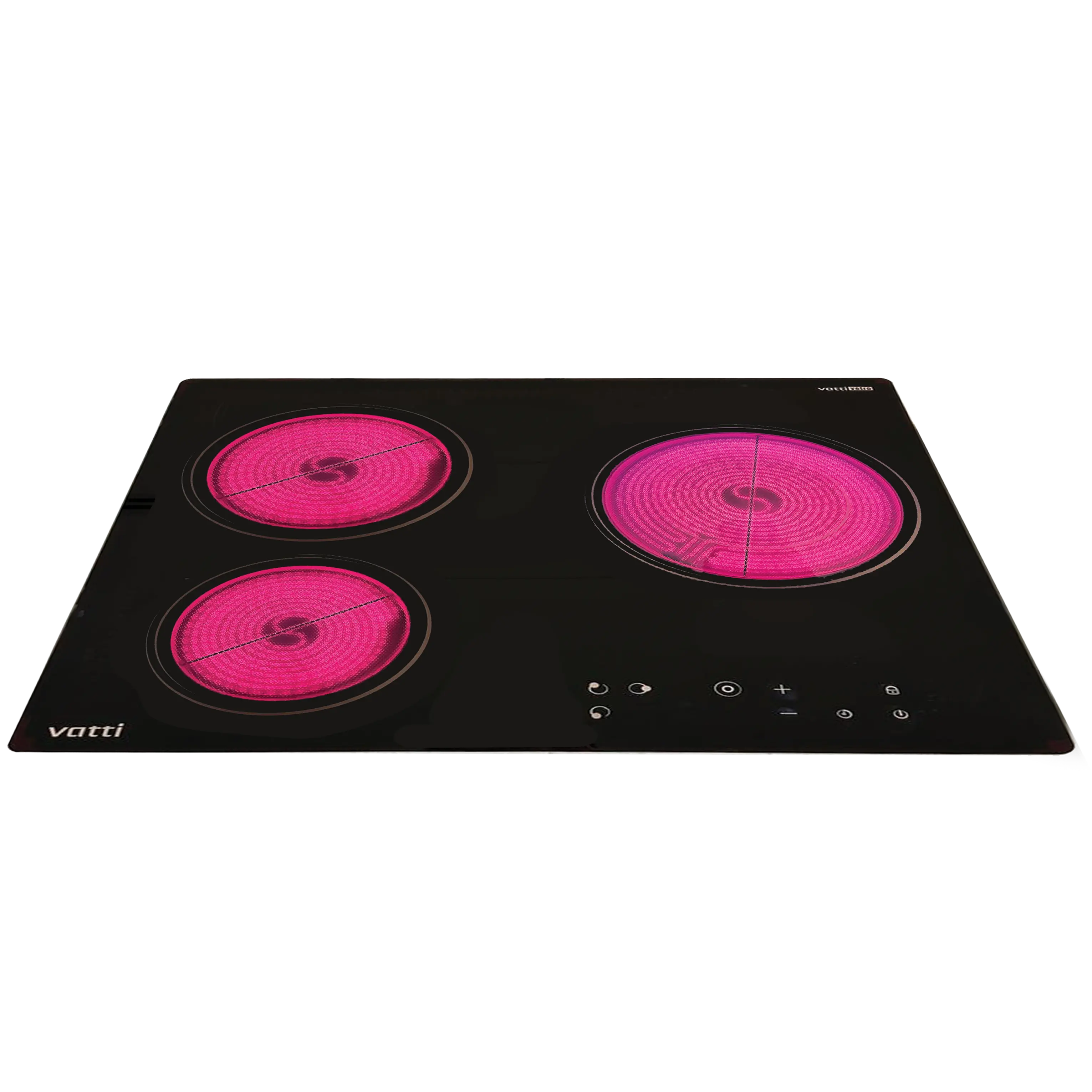
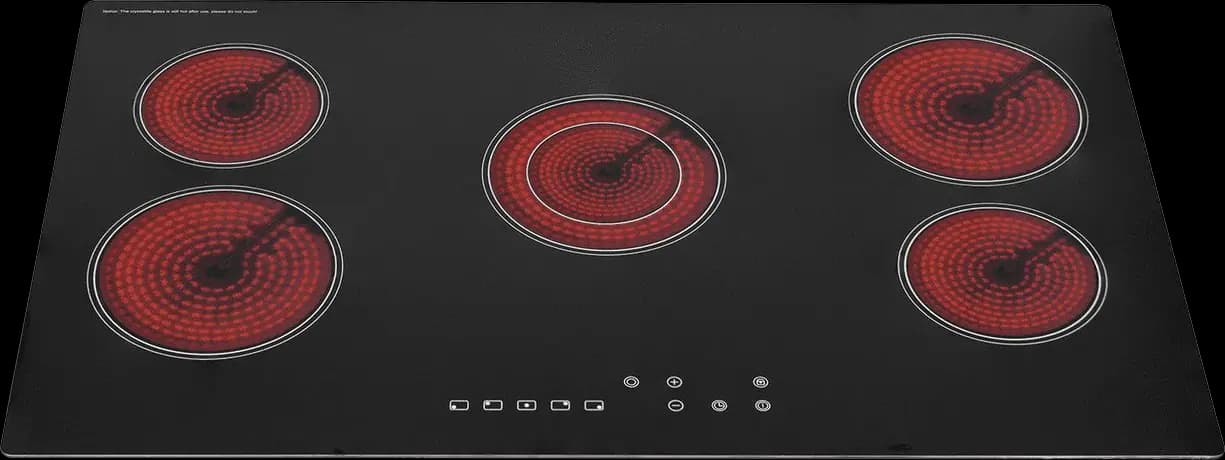
A sealed glass-ceramic hob avoids most of this, because there are no coil burners or drip pans to rust and nothing for water to sit in. The VATTI ER3601T has three zones under one sheet of ceramic glass, and the ER5902T has five on a 900 mm top, both with a full touch panel instead of metal knobs. For more on looking after an electric hob, read our electric stove safety tips.
Electric stove rust FAQs
Is it safe to cook on a rusty electric stove?
Light surface rust on the trim or drip pans is a cleaning job, not a hazard. Rust on a coil burner that has pitted, cracked or bulged the element is different: stop using that burner and replace the element.
How do I get rid of rust on stove plates?
For solid hot plates and drip pans, start with baking soda paste, then a vinegar soak and fine steel wool if it stays. Dry the plate fully afterwards and, on bare metal, wipe on a thin film of oil.
Can I use vinegar on a glass stove top?
Diluted vinegar is fine for cleaning glass, but rust marks on glass are usually stains from a rusty pan base. Use baking soda paste and a soft cloth, and never steel wool or sandpaper.
Why do my drip pans rust so quickly?
They catch every boil-over and often stay damp under the coil. Dry them after each clean and replace them when the coating has worn through, since a bare drip pan will keep rusting.
Can oil stop rust on a stove?
A thin film of cooking oil on bare steel parts slows rust, but keep any oil or spray off the heating elements and wipe off the excess. Drying the stove after every clean does more.
Final thoughts
Most stove rust is surface rust and comes off with baking soda, vinegar or lemon and salt. Match the method to the part, keep abrasives off glass and enamel, and dry everything afterwards so it does not return. If you are replacing an old coil stove, the VATTI cooker hob range has sealed ceramic, induction and gas hobs side by side.


