
Wok Cooking: How to Choose the Right Wok & Kitchen Setup
4 min read
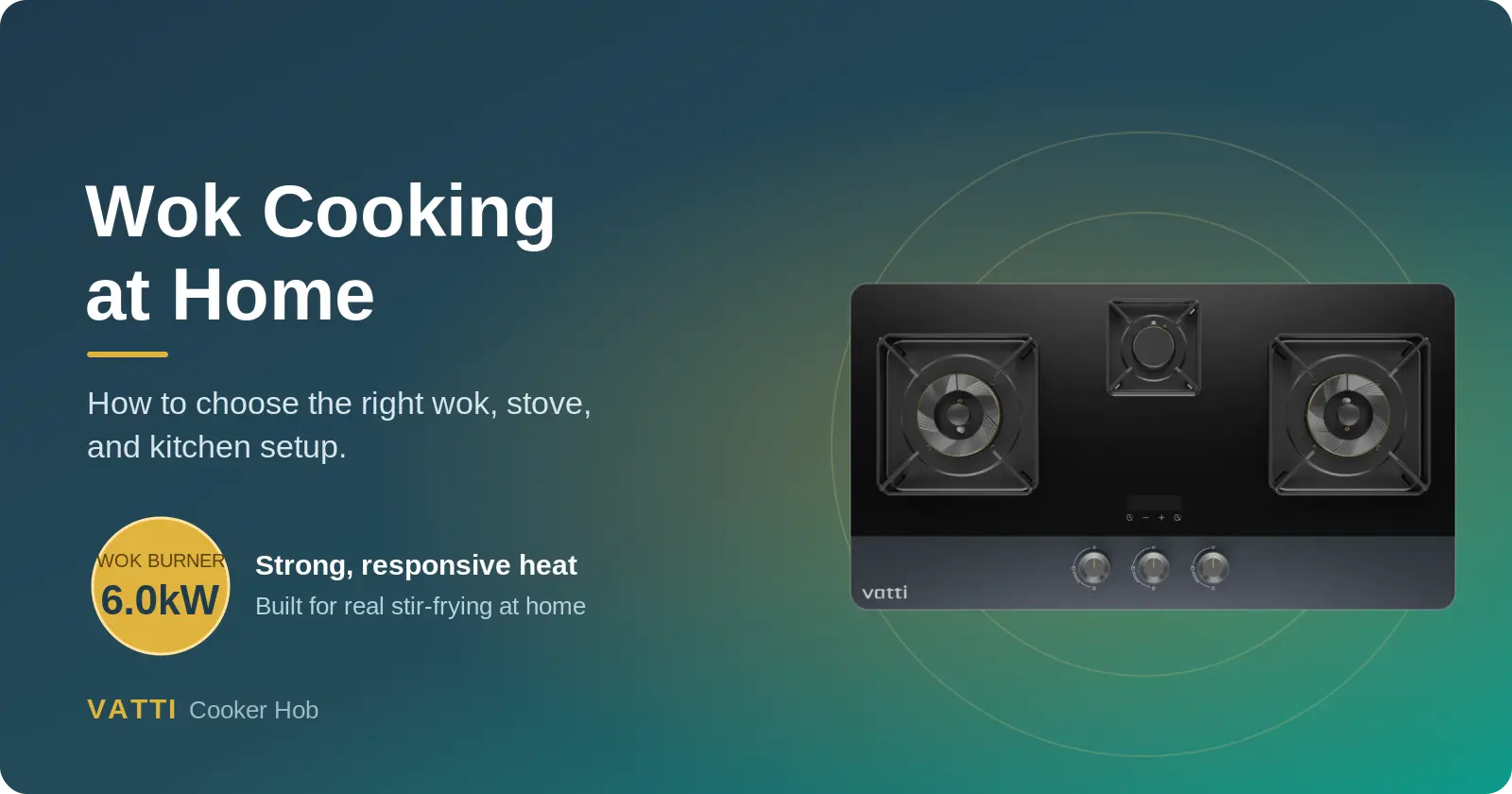
Want to stir-fry at home and get that smoky, restaurant-style flavour? It starts with the right gear. Great wok cooking is not just about skill, it is about pairing the right wok with a stove that brings strong heat and a kitchen that can handle the smoke. Here is how to set yourself up, in plain English.
Quick Answer: What Do You Need for Wok Cooking at Home?
Good wok cooking starts with three things: the right wok (carbon steel is the classic choice), a stove that delivers strong, responsive heat , and proper ventilation to clear smoke and steam. Get these right and you can stir-fry, sear, and steam like a restaurant kitchen at home.
What Makes Wok Cooking Different
Wok cooking is built around speed and high heat. The deep, curved shape of a wok lets you toss food quickly so it cooks evenly in seconds, while the very hot surface sears ingredients fast and locks in flavour. This is what creates wok hei , the prized smoky aroma you get from a properly fired stir-fry, often described as the “breath of the wok”.
A flat frying pan simply cannot do this as well. Its shape spreads food out and traps moisture, so ingredients end up steaming instead of searing. A wok keeps the heat concentrated and gives you room to move food around fast. That combination of shape, heat, and motion is the real secret behind good wok cooking, and it is why choosing the right tools matters so much.
Choosing the Right Wok
The wok itself is your most important decision. Different materials behave very differently, so it helps to know what you are working with before you buy. Here is a quick comparison of the most common options:
| Wok Type | Best For | Pros | Things to Note |
|---|---|---|---|
| Carbon steel | Everyday stir-frying | Heats fast, lightweight, builds flavour over time | Needs seasoning and care |
| Cast iron | Slow searing, heat retention | Holds heat very well | Heavy, slow to heat up |
| Stainless steel | Low-maintenance cooking | Durable, easy to clean | Food can stick more easily |
| Nonstick | Beginners, light cooking | Easy to use and clean | Not made for very high heat |
Beyond material, think about the base . A round-bottom wok suits a traditional gas burner with a wok ring, while a flat-bottom wok sits steadily on most modern hobs. For size, a 30cm to 36cm wok works well for home cooking, big enough to toss food freely without being unwieldy. A long handle plus a small helper handle on the side makes lifting and tossing much easier.
Setting Up Your Kitchen for Wok Cooking
High-heat wok cooking produces a lot of smoke, steam, and tiny oil droplets, so your kitchen setup needs to keep up. Give yourself enough clear counter space beside the hob to prep and plate quickly, since wok cooking moves fast and you will not have time to hunt for ingredients mid-stir-fry. Keep flammable items, paper, and plastic well away from the burner.
The most overlooked part is ventilation . Without a strong hood, that smoky air settles into your cabinets, walls, and clothes. A powerful kitchen hood pulls it all away and keeps your home fresh, which is essential for anyone who fries often. If lingering smells are a worry, our tips on how to avoid cooking smell in the house are well worth a read, and a good kitchen hood does most of the heavy lifting.
Seasoning and Caring for Your Wok
If you choose a carbon steel or cast iron wok, seasoning is the step that turns it into a naturally nonstick, flavour-building surface. To season a new wok, wash it, dry it fully, then heat it with a thin layer of oil until it darkens. Repeat this a few times and the wok develops a smooth, dark coating called a patina that only gets better with use.
Day to day, clean your wok with hot water and a soft brush rather than harsh detergent, which can strip the seasoning. Always dry it completely over low heat to stop rust forming, and rub in a little oil before storing. Treated well, a good wok can genuinely last a lifetime and cook better the more you use it.
Common Wok Cooking Mistakes to Avoid
A few simple slip-ups can hold back your stir-fries. The biggest is overcrowding the wok . Piling in too much food at once drops the temperature and makes everything steam instead of sear, so cook in smaller batches if needed. The second is not using enough heat . Wok cooking needs the pan properly hot before food goes in.
Other common mistakes include using an oil with a low smoke point, which burns and turns bitter, so reach for a high-smoke-point oil instead. Prepping ingredients too slowly is another, since everything happens fast once you start. And finally, skipping proper ventilation leaves your kitchen smoky and your home smelling of last night’s dinner. Avoid these and your wok cooking will improve almost overnight.
Final thoughts
Great wok cooking comes down to the right setup: a good wok, a strong-heat hob like the Vatti C830G , and a hood that clears the air. Not sure what suits your kitchen? Message us on WhatsApp for a free, tailored recommendation.


