Ducted or Ductless Range Hood: Which Is Better in Malaysia?
6 min read

A ducted range hood pushes smoke, steam and grease out of the house through a pipe. A ductless hood, also called a recirculating hood, pulls the air through filters and blows it back into the kitchen. Which one is better depends on one question: can a duct reach an outside wall or the ceiling void? If it can, ducted wins on every measure but installation cost. If it cannot, ductless is the option you have, and this guide explains how to get the most from it.
Quick Answer: Ducted or ductless, which is better?
Ducted, whenever the building allows it. A ducted hood removes heat, humidity and odour along with the smoke, which matters more in Malaysia than in a cool climate, and it handles wok cooking that a recirculating hood cannot. Choose ductless only where a duct run is impossible, and then buy the strongest one you can and change its carbon filter on schedule.
How each type works
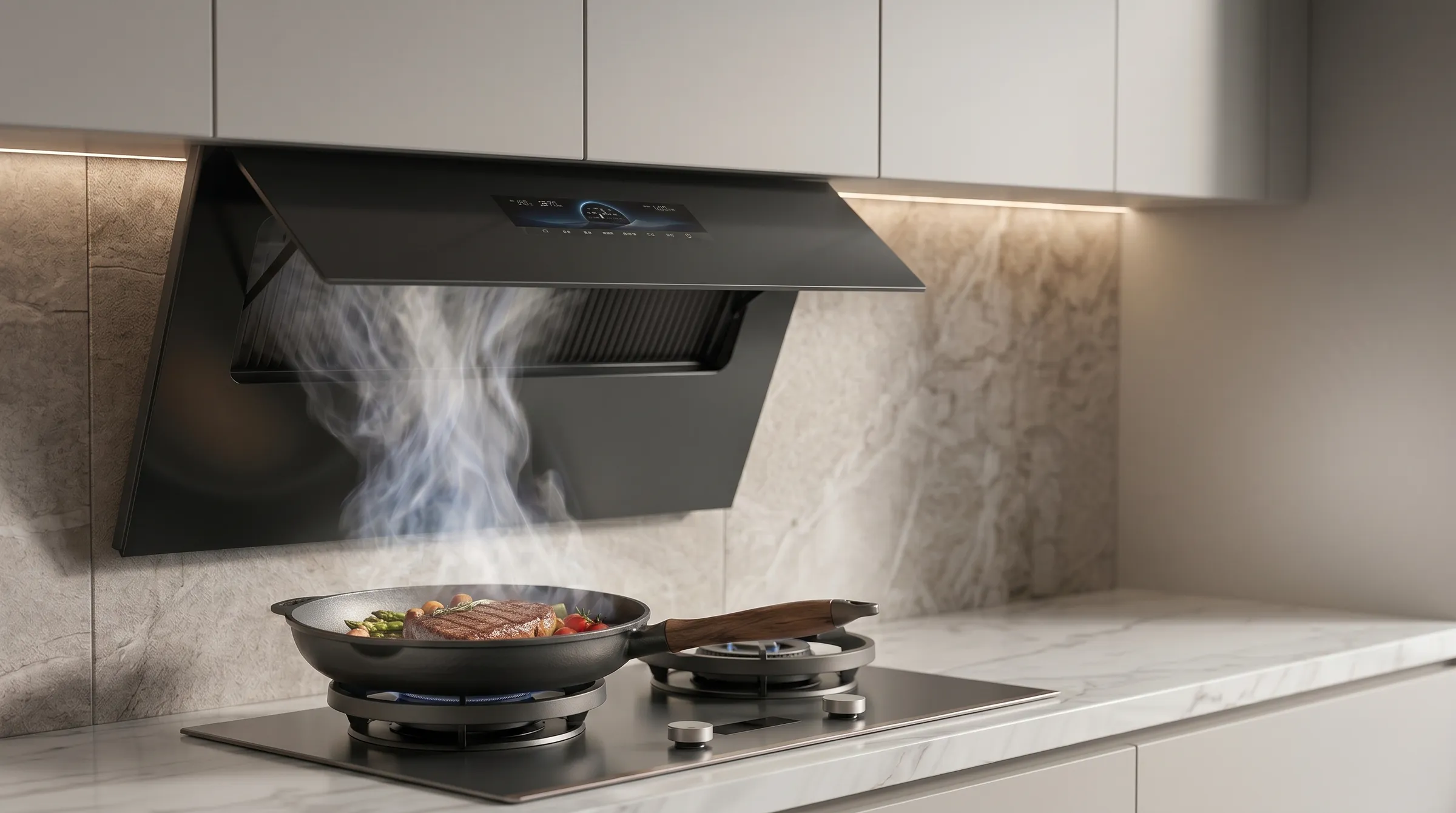
A ducted hood draws air through a grease filter or an oil-separating chamber, then drives it along a duct, usually 180 to 190 mm across, to a vent on an external wall or through the roof. The grease stays in the hood; everything else leaves the house.
A ductless hood draws air through the same grease stage, then through a charcoal filter that absorbs some of the odour, and returns the air to the room through vents at the top of the hood. The grease is caught, some of the smell is caught, and the heat and moisture stay in the kitchen.
Ducted vs ductless at a glance
| Ducted | Ductless | |
|---|---|---|
| Where the air goes | Outside | Back into the kitchen |
| Smoke and grease | Removed | Grease caught, fine smoke partly returned |
| Odour | Removed | Reduced, not removed |
| Heat and humidity | Removed | Stay in the room |
| Wok and high-heat cooking | Handles it | Struggles |
| Installation | Needs a duct run to a wall or roof | Hangs on the wall, plugs in |
| Ongoing cost | Filter cleaning | Charcoal filters every 3 to 6 months |
| Best for | Landed homes, condos with a duct path | Kitchens with no route outside |
Performance: what a Malaysian kitchen asks of a hood
Stir-frying at high heat produces more smoke and oil mist in five minutes than an oven does in an hour. A typical kitchen needs its air turned over about ten times an hour, which is roughly 650 to 800 m³/h of extraction, and a wok pushes that requirement up.
A ducted hood can meet it, and the figure to compare is not only airflow but static pressure: the push a hood keeps once the air has to climb a riser and turn corners. The VATTI kitchen hoods are ducted extractors running from 420 Pa up to 1,700 Pa, which is what a high-rise duct run needs. Our sizing guide on what hood size you need explains how to match width and airflow to the hob.
A ductless hood has no such number to win on. It can catch the grease and part of the smell, but the hot, wet air is still in the room, and charcoal saturates quickly under daily frying.
Installation: the deciding factor
A ducted hood needs a path for a 7 inch duct to an external wall or into a ceiling void that leads outside. In a landed house that is almost always possible. In a condominium it depends on the unit: many have a kitchen on an external wall or a service yard that makes it straightforward, some have a duct provision built in, and some forbid new wall penetrations. Check with management before you buy. Our guide to installing a chimney hood covers the duct route, the height and the electrics.
A ductless hood needs a wall and a socket. That simplicity is its whole appeal.
Cost and maintenance
Ducted costs more on the day, because of the duct run and the wall vent, and less afterwards. Its grease filter is washed rather than replaced, and hoods with an auto-clean cycle wash their own impeller with steam. See how to clean a kitchen hood filter.
Ductless costs less to fit and more to run. The charcoal filter cannot be washed and needs replacing every three to six months under Malaysian cooking, and a hood run on a spent charcoal filter is a fan that blows greasy air around the room.
When ductless is the right call
- The kitchen has no external wall and no ceiling route, and management will not allow one.
- It is a rental and the landlord will not permit ducting.
- Cooking is light: reheating, boiling and the occasional pan-fry rather than daily wok work.
In those cases a ductless hood is far better than no hood, and our guide to a kitchen hood without a vent explains how to choose one and what to expect.
So which is better?
Ducted, if the duct can be run. It is the only kind that actually removes the smoke, the smell, the heat and the humidity from a kitchen, and it is the only kind that keeps up with a wok. Ductless is the fallback for kitchens where a duct is impossible, and it is a real improvement over nothing, but it should not be chosen for convenience where ducting was possible.
Ducted vs ductless FAQs
Do ductless range hoods need filters? Yes, two. A grease filter that you wash, and a charcoal filter that you replace every three to six months. The charcoal filter is what does the deodorising, and it cannot be cleaned.
What is a good airflow for a range hood? For a typical Malaysian kitchen, 650 to 800 m³/h gives about ten air changes an hour, and heavy wok cooking benefits from more. If a spec sheet quotes CFM, multiply by 1.7 to get m³/h: 600 CFM is about 1,020 m³/h.
Where does the air go in a ductless range hood? Through the grease filter, through the charcoal filter, and back out into the kitchen through vents at the top or front of the hood.
How high should a range hood be above the hob? Usually 650 to 750 mm for a chimney or T-shape hood, and closer for a slim or hidden hood. Follow the height printed in the model's installation manual, because the airflow figures are measured at it.
Can a ductless hood be converted to ducted later? Many hoods sold as ductless are convertible: remove the charcoal filter, fit the duct adaptor, and run the duct. Check the manual before buying if you expect to renovate.
Is a ductless hood enough for wok cooking? No. It will catch some grease and some smell, but the smoke, heat and steam of high-heat frying stay in the room. If you cook that way, find a route for a duct.
Final thoughts
The choice between ducted and ductless is really the choice between removing the problem and filtering part of it. Run a duct if the building allows, and pick a hood with the static pressure to push through that run. Every VATTI kitchen hood is a ducted extractor, and the comparison table on that page lists airflow, pressure and noise for each model so you can match one to your duct.