
How to Install a Chimney Hood in Your Malaysian Kitchen
10 min read
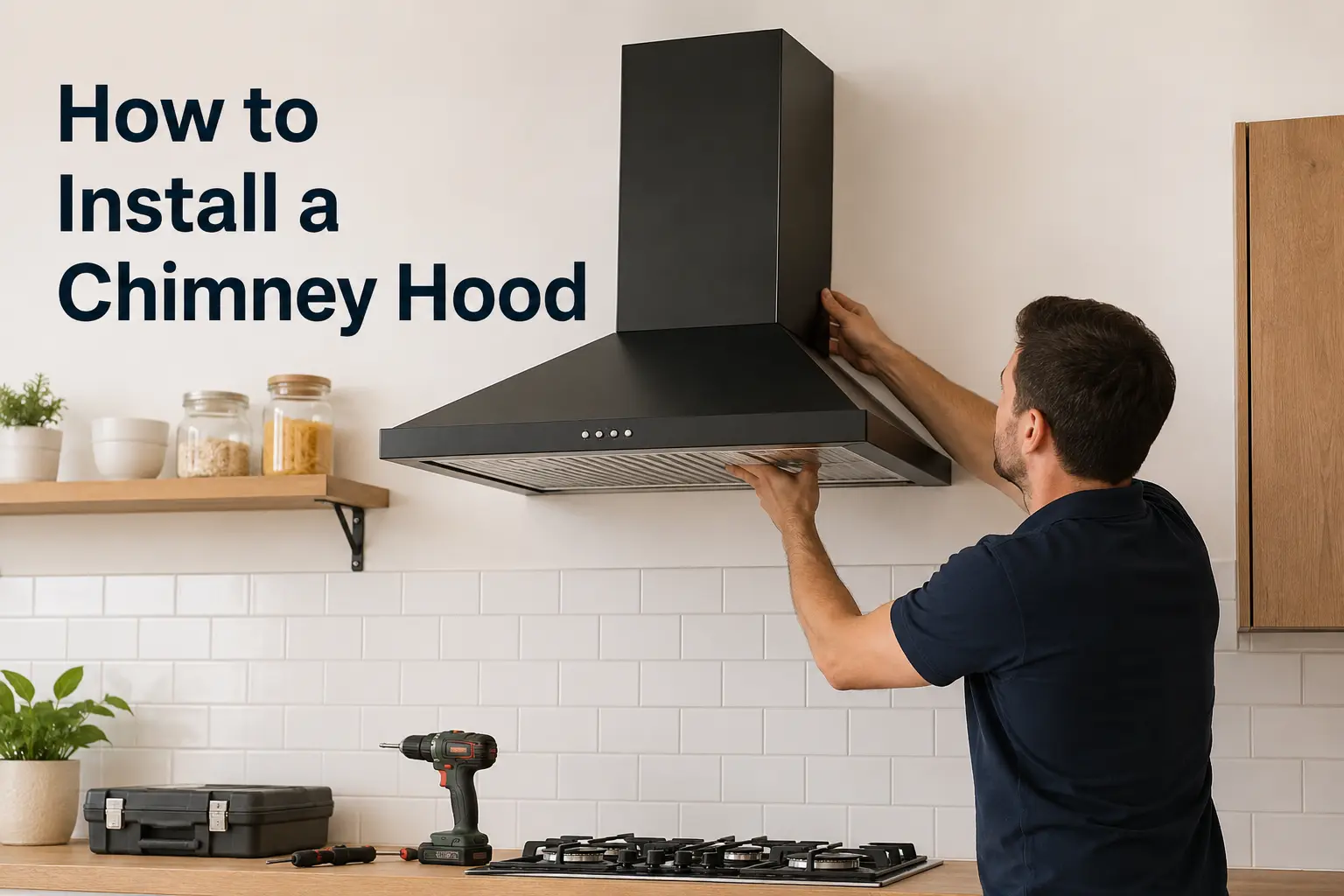
A noisy fan, smoky walls, and that lingering smell of last night’s sambal floating into the living room. Most Malaysian kitchens face the same battle every day, and the right chimney hood is what keeps the chaos under control. But even the most powerful hood will underperform if it is not installed properly . This guide walks you through exactly how to install a chimney hood in a Malaysian home, from planning and tools to wiring, ducting, and final testing. Whether you are renovating a new condo unit or upgrading the kitchen in a landed home, the steps below will help you get it right the first time.
Quick Answer: How to Install a Chimney Hood in Your Malaysian Kitchen?
To install a chimney hood: turn off the power, mark the mounting height 65 to 75cm above your hob , drill and secure the wall bracket, cut a 150mm exterior vent hole , connect the ducting in the shortest, straightest path possible, hang the hood with a second person, wire it to a dedicated power point, fit the chimney sleeve up to the ceiling, and test all fan speeds. For island layouts, high ceilings, or condo units with shared ducting , a professional installer is strongly recommended.
What Is a Chimney Hood and Why Choose One?
A chimney hood is a wall mounted or island mounted kitchen hood with a vertical chimney sleeve that channels smoke and grease up and out of the kitchen. It is the go to choice for modern Malaysian kitchens because it pairs strong extraction with a clean, bold visual statement above the hob. Unlike compact slim hoods or tucked under cabinet units, a chimney hood announces itself as a centrepiece while doing the heavy lifting on ventilation.
For families who cook with a wok every day, the powerful suction rate of a chimney hood (often 1500 to 2500 m³/h on premium models) makes a noticeable difference. Smoke clears faster, walls stay cleaner, and your cabinets last longer. If you are still weighing your options against compact or recirculating units, this overview of Vatti kitchen hood types and features breaks down the differences in detail. Chimney hoods also tend to be ducted (vented outside) , which is generally the more effective setup. If you are not sure whether to go ducted or ductless, the ducted vs ductless range hood guide is worth a read before you commit to an installation plan.
- Symbols = standardised guidance. Most major oven brands follow a consistent set of icons, so learning them once applies across any oven you use.
- Wrong symbol = wrong result. Using fan mode for a delicate sponge, or grill mode to cook meat through from raw, will almost always disappoint.
- Beginner tip: Always match the mode to your recipe before you adjust the temperature. The mode comes first.
To get consistently good results, it also helps to understand how long to preheat your oven before cooking. Skipping or rushing this step is one of the most common reasons home-baked food turns out uneven.
Things to Plan Before You Install a Chimney Hood
Good planning saves you from drilling holes in the wrong wall. Before you touch a screwdriver, run through this short checklist:
- Hob width matching. Your chimney hood should be at least as wide as your hob, ideally 90cm for most Malaysian kitchens . A mismatched width lets smoke escape sideways and drift across the room.
- Mounting height. Most chimney hoods are mounted 65 to 75cm above the cooktop for gas hobs , and slightly lower for induction. Check the manual for your specific model.
- Ceiling height. Standard ceilings (around 2.7m to 3m) are no issue, but high ceiling homes may need a chimney extension . Measure the gap before ordering.
- Ducting path. Plan the shortest, straightest route from the hood to the exterior wall or the shared service shaft (common in condos). Every bend in the duct reduces suction .
- Electrical points. A dedicated power socket within reach of the hood is ideal. If you do not have one, factor in an electrician.
Suction power and air pressure. For Malaysian wok cooking, look at airflow (m³/h) and air pressure (Pa). High rise units especially benefit from higher Pa ratings to push smoke through long shared ducting.
For families who cook with a wok every day, the powerful suction rate of a chimney hood (often 1500 to 2500 m³/h on premium models) makes a noticeable difference. Smoke clears faster, walls stay cleaner, and your cabinets last longer. If you are still weighing your options against compact or recirculating units, this overview of Vatti kitchen hood types and features breaks down the differences in detail. Chimney hoods also tend to be ducted (vented outside) , which is generally the more effective setup. If you are not sure whether to go ducted or ductless, the ducted vs ductless range hood guide is worth a read before you commit to an installation plan.
- Symbols = standardised guidance. Most major oven brands follow a consistent set of icons, so learning them once applies across any oven you use.
- Wrong symbol = wrong result. Using fan mode for a delicate sponge, or grill mode to cook meat through from raw, will almost always disappoint.
- Beginner tip: Always match the mode to your recipe before you adjust the temperature. The mode comes first.
To get consistently good results, it also helps to understand how long to preheat your oven before cooking. Skipping or rushing this step is one of the most common reasons home-baked food turns out uneven.
Tools and Materials You Will Need
Most professional installers bring their own kit, but if you are doing the work yourself or supervising a contractor, it helps to know what should be on hand:
- Power drill with masonry and HSS bits
- Spirit level and measuring tape
- Pencil for marking
- Phillips and flat head screwdrivers
- Wall anchors and mounting screws (usually included with the hood)
- Aluminium or PVC ducting pipe, typically 150mm in diameter
- Duct clamps and aluminium tape for sealing joints
- External vent cap with a backdraft flap
- Silicone sealant for the exterior vent opening
- Wire connectors and insulation tape if hardwiring is needed
- A second pair of hands . Chimney hoods are heavy and awkward to lift alone
Step by Step: How to Install a Chimney Hood
Once your kitchen is prepped and your tools are laid out, follow these steps in order. Always read your specific model’s manual alongside this guide, as mounting hole positions and accessories vary between brands.
- Turn off the power. Switch off the breaker that supplies the kitchen circuit. Test the existing socket with a voltage tester to confirm it is dead before you touch anything.
- Mark the hood position. Measure the centre point above your hob and mark the correct mounting height. Use a spirit level to draw a horizontal reference line. Match this against the mounting template that came with your hood.
- Drill the mounting holes. Drill into the wall at the marked points using a masonry bit. Insert the wall anchors. For concrete or brick walls (common in Malaysian homes) , make sure the anchors are seated flush.
- Mount the bracket. Fix the wall bracket using the supplied screws. Tug it firmly to check it is solid. The bracket carries the full weight of the hood, so this step matters.
- Cut the exterior vent opening. If your ducting needs to exit through a wall, drill a pilot hole from inside, then use a hole saw or core drill from outside. Aim for a clean 150mm opening that matches your duct diameter. Apply silicone sealant around the opening once finished.
- Connect the ducting. Attach one end of the duct to the hood’s outlet flange and the other to the exterior vent cap. Use duct clamps and aluminium tape at every joint. Keep the run as straight as possible . Each 90 degree bend can reduce extraction by up to 25 percent .
- Lift and hang the hood. With a second person, lift the hood onto the wall bracket. Make sure it locks into place. Tighten the supporting screws at the back or underside (refer to your manual).
- Connect the power. Plug the hood into the dedicated socket. If your unit requires hardwiring, match live, neutral, and earth wires using proper connectors. If you are not confident with electrical work, stop and call a licensed electrician .
- Fit the chimney sleeve. Slide the lower chimney section over the body of the hood, then extend the upper section up to the ceiling. Secure both sections with the supplied screws or clips so the sleeve does not rattle.
- Test the hood. Turn the breaker back on, switch the hood through each speed setting, and confirm that air is being drawn through. Hold a piece of tissue near the filter to check suction. Run the auto clean cycle if your model has one.
Common Installation Mistakes to Avoid
Even experienced contractors slip up on the small details. Watch out for these common issues, which are usually the reason a hood underperforms after installation:
- Mounting the hood too high. If the distance from the cooktop is more than 75cm, suction efficiency drops sharply and smoke escapes the perimeter.
- Undersized or kinked ducting. Always use the duct diameter recommended in your hood’s manual, usually 150mm . Flexible foil ducting that bends sharply will kill airflow.
- Too many bends in the duct run. Two bends are acceptable. Four or five and your hood will sound like a jet engine while moving almost no air.
- Skipping the vent cap or external sealant. Without a backdraft flap, lizards, insects, and humid air will flow back into your kitchen. Without sealant, rain seeps into your wall cavity.
- Exposed wiring. Tuck all wiring inside the chimney sleeve or behind cabinetry. Loose cables near a heat source are an obvious safety risk .
- Ignoring shared duct rules in condos. Many high rise buildings have shared service shafts. Check your management’s rules before tapping into them.
Should You Install a Chimney Hood Yourself or Hire a Professional?
A confident DIYer can install a wall mounted chimney hood in a typical landed home, especially when there is an existing power socket and a short, straight ducting path to an exterior wall. The work is mostly drilling, mounting, and connecting a duct. That said, professional installation is strongly recommended in several situations: high ceilings that need chimney extensions, island mounted hoods that vent through the roof, condos with shared service shafts, kitchens that need new wiring or a dedicated breaker , and any setup where you are not 100 percent sure about wall composition or hidden plumbing.
A poorly installed hood is not just inefficient, it is also a safety hazard . Loose wiring, leaking duct joints, and unsecured chimney sleeves can lead to electrical faults or grease fires. If you are buying a premium model like the Vatti Aetheris V929 or the space saving Vatti Slim Series V996 , it is worth protecting that investment by going with a trained installer. You can browse the full Vatti chimney hood range in Malaysia to find a model that matches your kitchen layout.
After Installation: Quick Maintenance Tips
Installation is only half the job. The real test of a chimney hood is how well it performs three years down the line, and that depends entirely on how you look after it. A few simple habits go a long way:
- Wipe the stainless steel surface weekly with a damp microfibre cloth and a mild detergent. Avoid abrasive scrubbers.
- Clean or replace the grease filters every one to three months , depending on cooking frequency. Most Vatti filters are dishwasher safe.
- Run the auto clean cycle if your hood has one. High pressure steam wash and heat clean functions break down stubborn oil residue inside the motor housing.
- Inspect the ducting once a year. Look for blockages, dust buildup, and signs that the vent cap is still moving freely.
- Schedule a professional service every 12 to 24 months. Technicians can check motor performance, electrical connections, and seal integrity in places you cannot easily reach.
Final thoughts
If you are still deciding which model fits your space, or if you want a professional team to handle the installation for you, the Vatti Malaysia team is happy to help. Message us on WhatsApp for a free consultation, a product recommendation, or to book installation support anywhere in Klang Valley and beyond.


