What Is Auto Clean? VATTI Self-Cleaning Hoods Compared
5 min read

Tired of scrubbing a greasy range hood? Auto clean is the feature that does the dirty work for you. With one tap, the hood cleans its own interior, fan, and motor housing, keeping suction strong and saving you the messiest chore in the kitchen. VATTI offers a few different auto-clean systems, so here is how they work and how to tell them apart.
Quick Answer: What Is Auto Clean?
Auto clean is a built-in function that lets a range hood clean its own interior automatically , with no dismantling needed. Depending on the model, VATTI hoods use steam and hot water, high-pressure pulse washing, or high-temperature heat to dissolve and flush away grease, keeping the fan and motor clean so suction stays strong over time.
Why Auto Clean Matters
In Malaysian kitchens, frequent frying and wok cooking send a lot of grease into the hood. Over time that grease coats the fan and inner chamber, and a greasy fan loses suction, works harder, and wears out faster. Cleaning those internal parts by hand is difficult and unpleasant, which is exactly why most people never do it.
Auto clean solves this by washing the inside of the hood for you at the press of a button. The payoff is real: stronger, longer-lasting suction, fewer odors, lower fire risk from grease buildup, and far less manual maintenance. It does not fully replace wiping the exterior or rinsing the filter, but it handles the hardest part, the bit you cannot easily reach.
1. Steam + Hot Water Dual Clean (V938)
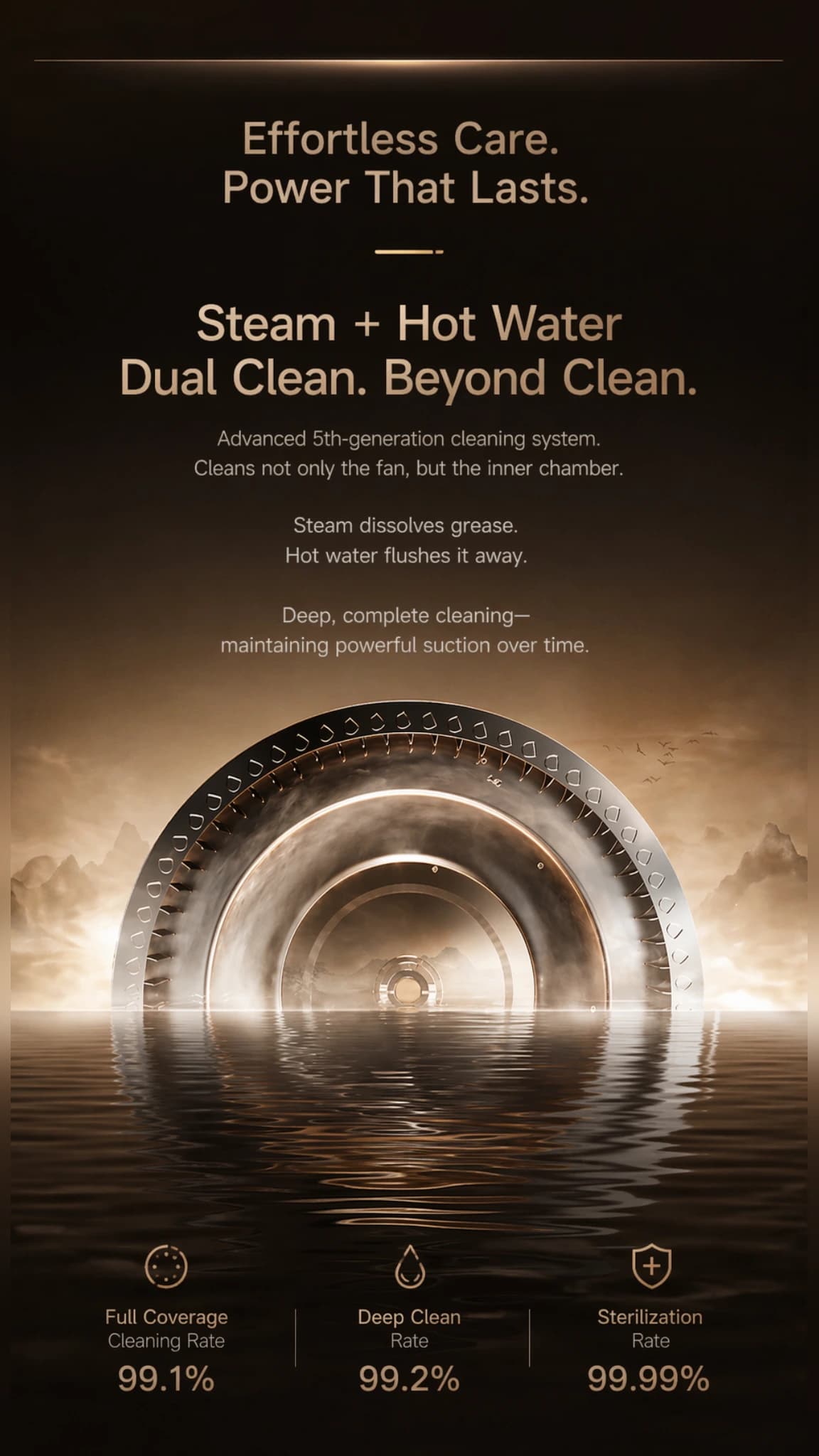
The V938 uses VATTI’s fifth-generation Steam + Hot Water Dual Clean system. It works in two stages: steam first softens and dissolves the hardened grease coating the fan and inner chamber, then hot water flushes the loosened residue away. Because it cleans not just the fan but the whole inner chamber, very little grease is left behind.
VATTI rates this system at a 99.1% full-coverage cleaning rate, a 99.2% deep-clean rate, and 99.99% sterilization, the kind of deep, complete clean that keeps suction powerful over the years. If your priority is the most thorough internal clean, this is the system to look at.
2. Pulse-Wave Wash (V960)
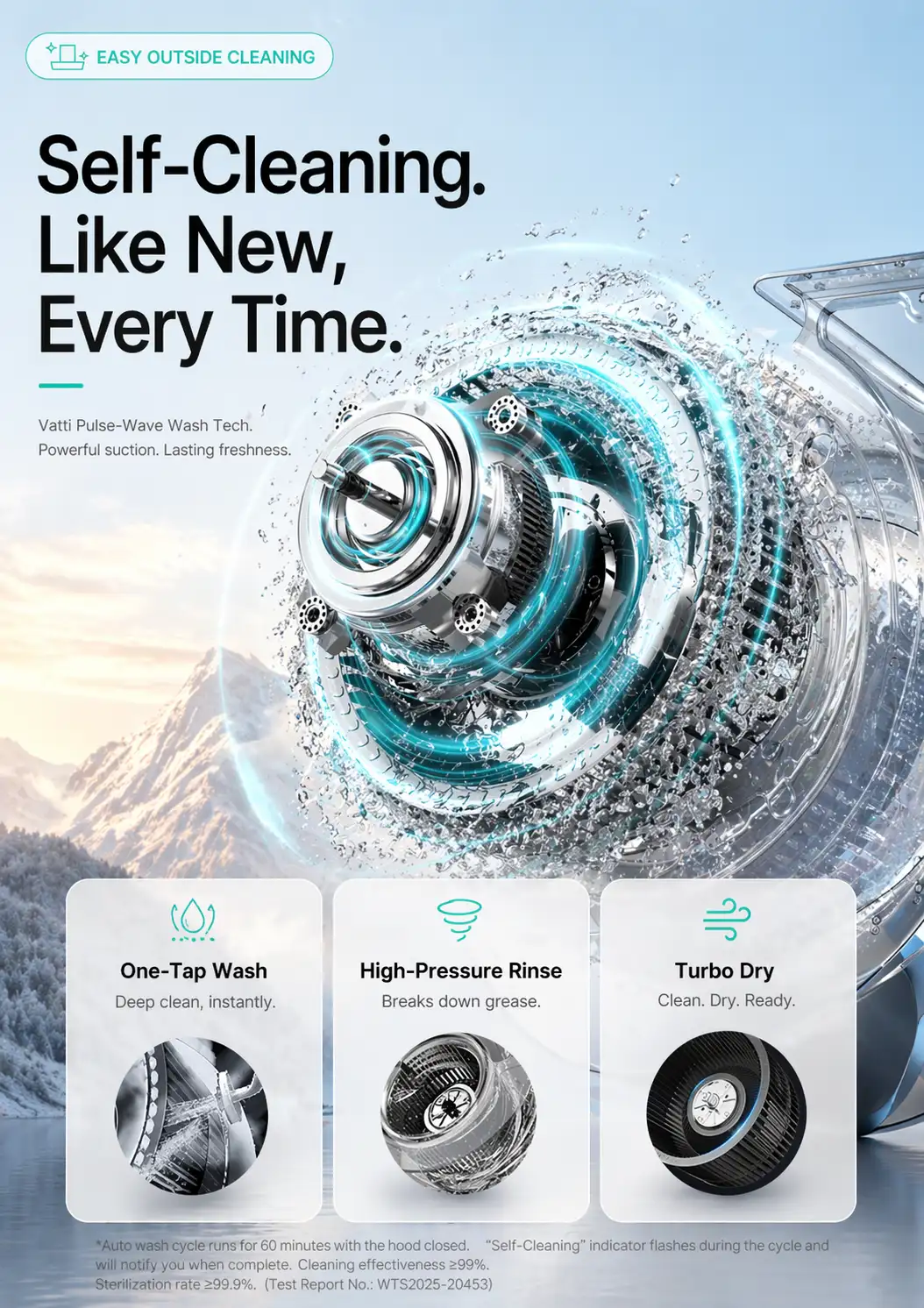
The V960 features VATTI’s Pulse-Wave Wash technology, designed around convenience. It runs in three clear stages: a One-Tap Wash starts a deep clean instantly, a High-Pressure Rinse breaks down and blasts away grease, and a Turbo Dry finishes the cycle so the interior is left clean and dry, ready to use.
The full auto-wash cycle runs for about 60 minutes with the hood closed, and a self-cleaning indicator flashes during the process and notifies you when it is done. VATTI lists cleaning effectiveness at 99% or higher and a sterilization rate of 99.9% or higher. If you want a hands-off, set-and-forget clean, the V960 is built for that.
3. Heat Auto-Clean (V917)
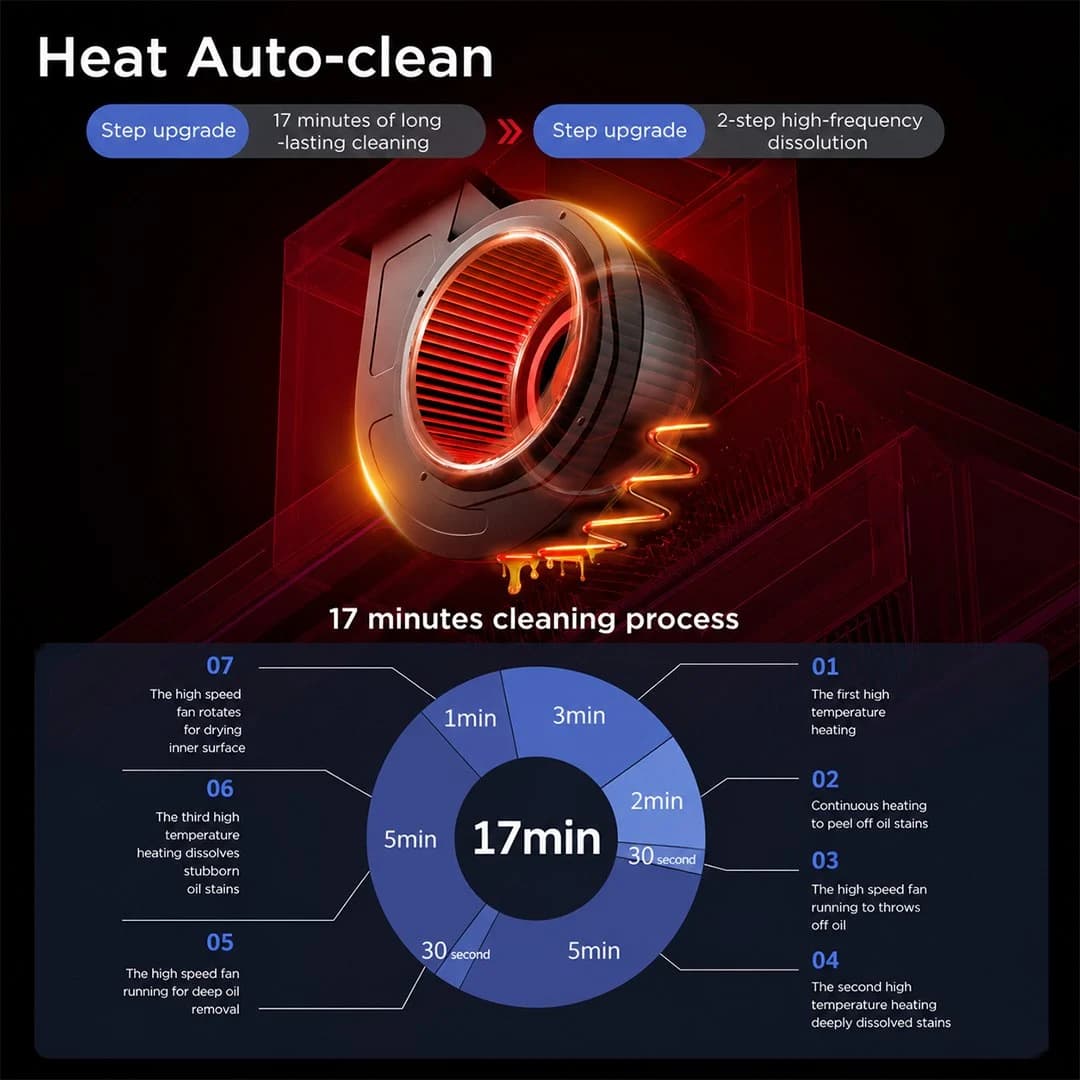
The V917 takes a different approach with Heat Auto-clean , which uses high temperature rather than water to deal with grease. Over a 17-minute cleaning process , the hood runs through cycles of high-temperature heating that dissolve and peel off oil, alternating with high-speed fan spins that throw off the loosened grease.
The cycle finishes with the fan running at high speed to dry the inner surface. Because it relies on heat and spinning rather than a water tank and drainage, it is a clean, self-contained way to keep the interior free of stubborn baked-on oil. It suits anyone who prefers a waterless auto-clean method.
Other VATTI Auto-Clean Methods
VATTI uses a couple of other auto-clean systems across its range too. The Aetheris Series V929 features a fifth-generation turbo wash auto clean, which uses a powerful water wash to scour the fan and inner chamber. The Magic Series V919 uses a high-pressure steam wash auto clean, where pressurised steam loosens and washes grease off the internal parts. Both achieve the same goal as the systems above, keeping the hard-to-reach interior clean, simply using a different cleaning medium.
VATTI Auto-Clean Systems at a Glance
Beyond the three above, VATTI uses a few other auto-clean methods across its range. Here is a side-by-side of all the main systems to help you compare:
| Model | Method | How It Cleans | Best For |
|---|---|---|---|
| V938 | Steam + Hot Water | Steam dissolves grease, hot water flushes it away | Deepest, most complete interior clean |
| V960 | Pulse-Wave Wash | One-tap wash, high-pressure rinse, then turbo dry | Hands-off convenience |
| V917 | Heat Auto-clean | High-temperature heating plus high-speed fan spins (17 min) | Waterless cleaning |
| V929 | Fifth-Gen Turbo Wash | Turbo water wash of the fan and inner chamber | Strong all-round clean |
| V919 | High-Pressure Steam Wash | High-pressure steam loosens and washes off grease | Steam-based simplicity |
All of these keep the hardest-to-reach internal parts clean automatically. The differences come down to the cleaning medium, steam, pressurised water, or heat, plus the hood’s size, suction, and style. Exact methods and ratings can vary by model and production batch, so always check the spec sheet of the specific hood you are considering.
Does Auto Clean Replace All Cleaning?
Auto clean handles the inside of the hood, the part that is genuinely hard to reach, but a little routine care still helps. You will still want to wipe the exterior surfaces and give the grease filter an occasional rinse to keep everything fresh. Our guide on how to clean a kitchen hood filter covers that simply, and our range hood maintenance tips round out the rest.
Think of auto clean as doing the heavy lifting while you handle the quick, easy surface jobs. Together they keep your hood performing like new for years. You can see which VATTI models include these systems on our kitchen hood collection .
Final thoughts
Auto clean takes the worst chore in the kitchen off your hands and keeps suction strong for years, whether you choose steam, pulse-wave, or heat-based cleaning. Not sure which VATTI model suits you? Message us on WhatsApp for a free, tailored recommendation.