
Oven Symbol for Baking Cookies: What Each Icon Means
7 min read
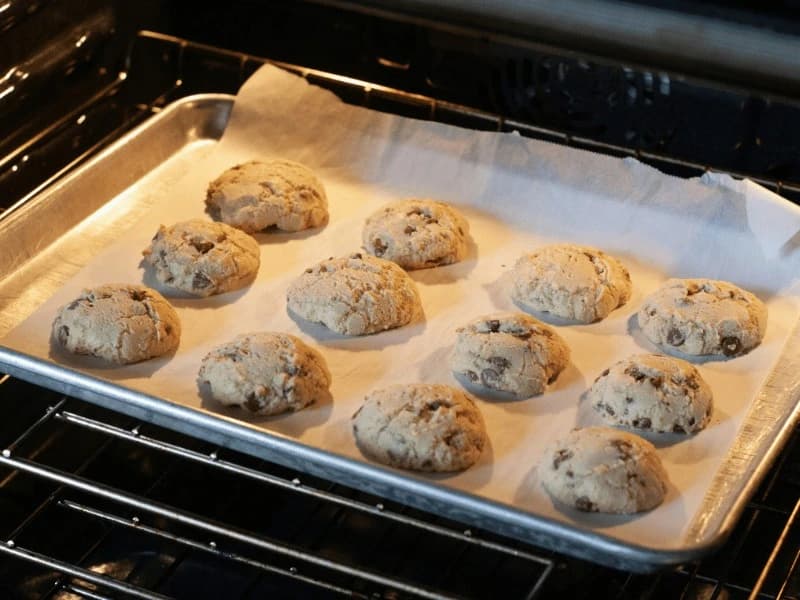
If you have ever pulled a tray of cookies out of the oven only to find them burnt on the bottom, pale on top, or just a bit off, there is a good chance it was not the recipe at fault. It might have been the oven symbol you chose. Modern built-in ovens come with a range of cooking symbols, and knowing which one to use for baking cookies can make a real difference to your results. Whether you are baking chocolate chip cookies for the kids, butter cookies for a celebration, or traditional kuih for the festive season, this guide will help you match the right oven symbol to the job
Why the Right Oven Symbol Matters for Cookies
Cookies are more sensitive to heat than most people realise. They are small, thin, and spend a relatively short time in the oven, which means the heat source and airflow inside your oven have a big impact on the final result. Choose too high or too direct a heat, and the bottoms scorch before the centres set. Choose a setting without enough air circulation, and you end up with uneven browning across the tray.
Different oven symbols control which heating elements are active and whether the oven fan is running. These two factors together determine how the heat reaches your cookies. Once you understand what each symbol does, choosing the right one becomes second nature, and your baking results will be far more consistent.
The Conventional Baking Symbol (Top and Bottom Heat)
What it looks like: Two horizontal lines, one at the top of a square and one at the bottom.
This is the classic baking setting. When you select it, the oven activates both the top and bottom heating elements without turning on the fan. Heat spreads naturally through the oven cavity, which means it is slightly warmer at the top and slightly cooler at the bottom.
For cookies, this setting works well when:
- You are baking a single tray of cookies on the middle rack.
- You want a gentle, unhurried bake where the cookies have time to spread and set evenly.
- You are making delicate cookies like almond florentines or thin lace cookies that might dry out too quickly under fan heat.
The main thing to watch out for with conventional baking is that the heat is static. If you are using more than one tray, the cookies on the lower rack may brown faster on the bottom, while those on the upper rack may take longer. For single-tray baking, though, it is a reliable and straightforward choice.
The Fan Forced Symbol (Convection Baking)
What it looks like: A fan inside a circle, sometimes with a heating element ring around it.
Fan forced mode is the most popular setting for baking cookies, and for good reason. When you select this symbol, a fan at the back of the oven actively circulates hot air throughout the entire cavity. This creates an even temperature from top to bottom and front to back, which means your cookies bake more uniformly regardless of where they sit in the oven.
This is the setting to reach for when:
- You are baking two or more trays of cookies at once.
- You want consistent browning across every cookie on the tray.
- You need faster baking times, as fan forced mode generally cooks about 10 to 20 percent quicker than conventional.
One important tip: when switching from a conventional recipe to fan forced mode, reduce the temperature by around 10 to 20 degrees Celsius. Because the circulating air transfers heat more efficiently, your oven does not need to be as hot to achieve the same result. Skipping this adjustment is one of the most common reasons cookies overbrown in a fan oven.
If you have a combi oven , the fan forced function works similarly, giving you even heat distribution for reliable baking across multiple racks.
The Fan Assisted Symbol
What it looks like: A fan icon combined with heating element lines at the top and bottom of the square.
Fan assisted mode is sometimes confused with fan forced, but there is a key difference. In fan assisted mode, both the top and bottom heating elements are active at the same time as the fan. In true fan forced mode, only the circular element around the fan runs.
In practice, fan assisted gives you slightly more heat intensity from the top and bottom elements alongside the circulating air. For cookies, this can be a good middle ground if you want the even distribution of fan cooking but with a little more colour on top. It works particularly well for thicker, chunkier cookies like oatmeal cookies or double chocolate cookies that need to be fully cooked through.
As with fan forced mode, remember to reduce your oven temperature slightly compared to what a conventional recipe calls for, and keep an eye on your cookies from around the halfway mark.
The Bottom Heat Symbol
What it looks like: A single horizontal line at the bottom of a square.
Bottom heat mode activates only the lower heating element, directing all the heat upward from beneath your baking tray. For most cookies, this is not the first setting you would reach for, but it does have its uses in a baking context.
You might use bottom heat for cookies when:
- You want an extra-crispy, firm base on your cookies, such as for shortbread or biscotti.
- Your cookies are already golden on top but the centre or base needs a little more time to firm up.
- You are finishing off a batch that has been mostly baked but needs the bottom to catch up.
Bottom heat is also commonly used for pies and tarts to ensure the pastry base cooks through properly, so if you are making cookie-based tart shells or crumb crusts, this is the symbol to look for.
Quick Comparison: Which Symbol to Use for Your Cookies
Here is a simple reference table to help you decide:
| Oven Symbol | Best Cookie Type | Key Tip |
|---|---|---|
| Conventional (Top + Bottom) | Delicate, single-tray cookies | Use middle rack for even heat |
| Fan Forced | All cookies, multi-tray baking | Reduce temp by 10 to 20 degrees |
| Fan Assisted | Thick, chunky cookies | Reduce temp slightly, watch closely |
| Bottom Heat | Crispy-base shortbread, biscotti | Best for finishing or firming the base |
Practical Tips for Baking Perfect Cookies in a Built-In Oven
Knowing the right symbol is only part of the equation. Here are a few extra tips that will take your cookie baking from good to consistently great:
- Always preheat your oven fully before putting your cookies in. Placing dough in an oven that has not reached temperature yet results in uneven spreading and unreliable baking times.
- Use the middle rack as your default position for single-tray baking. It gives you the most balanced heat exposure from both the top and bottom elements.
- Line your baking tray with baking paper or a silicone mat. This protects the bases of your cookies from direct contact with the hot metal, reducing the risk of over-browning on the bottom.
- Do not overcrowd the tray. Cookies need space around them so hot air can circulate properly. Overcrowding traps steam and leads to soft, pale edges.
- Rotate your tray halfway through baking if you notice uneven browning. Even in a fan oven, hot spots can occur near the back or sides of the oven cavity.
- Use an oven thermometer to check your oven’s actual temperature. Over time, ovens can run slightly hotter or cooler than the dial indicates, and knowing this helps you adjust accordingly.
Vatti built-in ovens are designed with clearly labelled controls and multiple cooking modes, making it easy to switch between settings and get consistent results across all your baking. You can explore the full Vatti built-in oven range to find a model that suits your kitchen and your cooking style. And if you are looking for inspiration on what to bake next, check out the Vatti recipe blog for ideas.
Conclusion
Getting the right oven symbol for baking cookies does not have to be complicated. As a general rule, fan forced is your best friend for even, consistent results across multiple trays. For single-tray, more delicate baking, conventional top and bottom heat gives you a gentle and steady bake. Fan assisted sits nicely in between, while bottom heat is a handy tool for getting that perfectly crisp base.
Once you start matching your oven symbol to your cookie type, you will notice a real improvement in your results. Fewer burnt bottoms, more even browning, and cookies that turn out the way they are supposed to every time.
Final thoughts
Thinking about upgrading to a built-in oven that makes baking easier and more enjoyable? WhatsApp Vatti Malaysia and our team will be happy to help you find the right fit for your kitchen.


