Ceramic Cooker vs Infrared Cooker: What Is the Difference?
5 min read
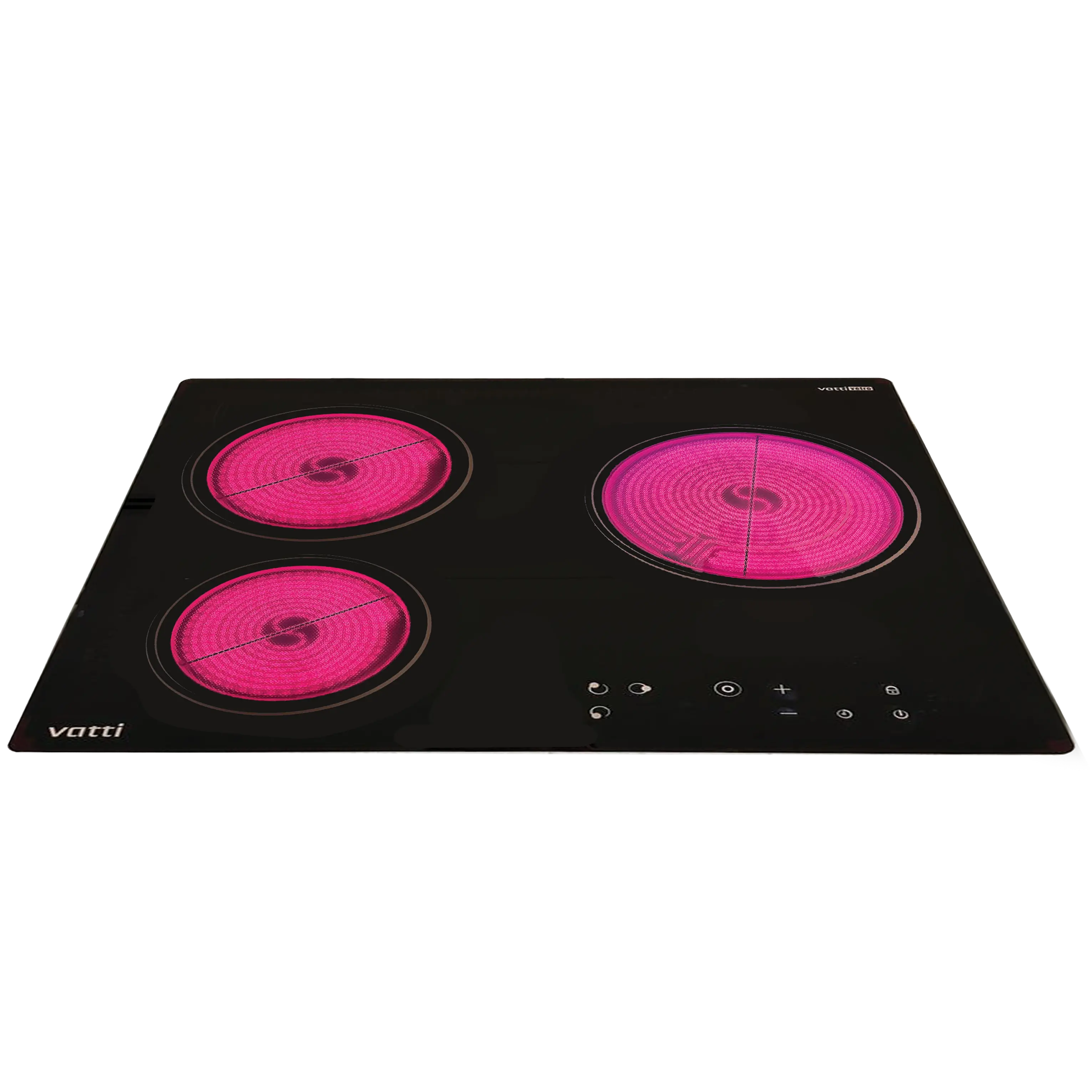
"Infrared cooker" means two different things in Malaysia, and the confusion sends a lot of people to the wrong page. One is the electric infrared cooker: a glass-topped hob or portable cooktop with a heating element under the glass that glows red. The other is the infrared gas stove, a gas burner that glows red through a perforated plate. This guide is about the electric kind, compared with its closest relative, the ceramic cooker. If you came here for the gas kind, our guide to infrared gas stoves is the one you want.
Quick Answer: Ceramic or infrared cooker?
They are the same family. Both heat a pan through a glass-ceramic top with an electric element beneath it. A ceramic cooker uses a radiant coil; an infrared cooker uses a halogen lamp or a high-temperature radiant element that reaches heat faster and glows brighter. The infrared version heats up quicker, the ceramic version is usually cheaper and simpler, and both take any pan. The real choice is between either of them and induction.
How a ceramic cooker works
Under the glass sits a coiled resistance element, a ribbon of metal that glows red when current runs through it. The element heats the glass above it, the glass heats the pan. The zone marked on the glass shows where the element is. Heating is steady and the glass stays hot for a while after switching off, which is why every ceramic hob has a residual heat indicator.
The VATTI ER3601T and the five-zone ER5902T are ceramic hobs of this kind, with dual zones that step up to suit a larger pan.
How an electric infrared cooker works
The element is designed to run hotter and radiate more. In a halogen cooker it is a quartz-halogen lamp that reaches full glow almost instantly; in others it is a high-temperature radiant element. Because more of the heat arrives as radiation through the glass rather than conduction, the pan warms faster and the cooker responds more quickly to the control. Portable single-zone "infrared cookers" sold in Malaysia are usually this type, and they are popular because, unlike induction, they take any pot.
Ceramic vs infrared at a glance
| Ceramic cooker | Electric infrared cooker | |
|---|---|---|
| Heat source | Radiant coil under glass | Halogen lamp or high-temperature element under glass |
| Time to heat | Moderate | Fast, glows almost instantly |
| Response to the control | Slow, with lag | Quicker, still some lag |
| Cookware | Any flat-based pan | Any flat-based pan |
| Surface after cooking | Hot for 15 to 30 minutes | Hot for 15 to 30 minutes |
| Energy efficiency | Moderate | Slightly better |
| Price | Lower | Higher, or similar on portables |
| Where sold | Built-in hobs | Portable cooktops and some built-ins |
Speed and control
The infrared cooker is quicker to heat and quicker to react, because its element runs hotter and radiates rather than conducts. Neither is instant: both heat glass, and glass takes time to warm and time to cool. Anyone used to gas will notice the lag on both; anyone used to a plain electric plate will find both a clear improvement.
Cookware
This is where both beat induction. A ceramic or infrared cooker heats any flat-based pan: aluminium, copper, glass, clay, stainless of any kind. There is no magnet test. A round-bottomed wok does not sit well on either, so wok cooks should look at gas.
Cleaning
Both are a flat sheet of glass and wipe clean. The catch on both is that sugar or sauce landing on hot glass bakes on within seconds, so spills are best wiped once the glass has cooled, with a cooktop cream rather than a scourer. See our guides to white spots on a glass stove top and scratches on a glass stove top.
Safety
Both stay hot after switching off and both show a residual heat warning until the glass cools. Both usually carry a child lock and an overheat cut-off; the VATTI ceramic hobs carry all three. Neither has an open flame or produces combustion gases, which is a point in their favour in a small or poorly ventilated kitchen.
Running cost
An infrared element wastes a little less heat than a coil, so it is marginally cheaper to run for the same cooking. Both use more electricity than induction, which heats the pan directly and loses very little to the glass and the air. Our full comparison of induction versus ceramic covers that side.
Which should you buy?
- Ceramic if you want a built-in electric hob, keep your existing pans, and prefer the lower price. The ER3601T and ER5902T are this.
- Electric infrared if you want the faster response of the two and are looking at a portable cooktop, or at a built-in that offers it.
- Induction if speed, efficiency and a cool surface matter more than cookware freedom. The VH-IC9-LA gives you one induction zone and one ceramic zone on the same top, so you can have both.
- Gas if the wok is the centre of your kitchen. See infrared burner vs gas burner for that decision.
Ceramic vs infrared FAQs
Is an infrared cooker the same as a ceramic cooker? Nearly. Both heat through glass-ceramic; the infrared version uses a hotter, faster element. Some brands use the words interchangeably.
Is an infrared cooker the same as an induction cooker? No. Induction heats the pan with a magnetic field and needs a magnetic pan. An infrared cooker heats the glass with an element and takes any pan.
Is an infrared cooker energy efficient? More than a plain electric plate and slightly more than a ceramic coil, but less than induction. Expect 60 to 70 percent of the energy to reach the pan against around 85 percent for induction.
Can I use a wok on a ceramic or infrared cooker? A flat-bottomed wok, yes. A round-bottomed wok will not make good contact with the glass.
Which is safer? They are alike. Both stay hot after use and both show a residual heat warning. Neither has a flame.
Final thoughts
Ceramic and electric infrared cookers are two versions of one idea, a glowing element under glass, and the infrared version is the quicker of the two. Choose between them on price and speed, and choose either of them over induction only if cookware freedom matters more than efficiency. The VATTI cooker hob range has ceramic, induction and gas hobs listed side by side, with the zones and burners of each model spelled out.