
What Is a Chimney Hood? Everything Malaysian Home Cooks Need to Know
8 min read
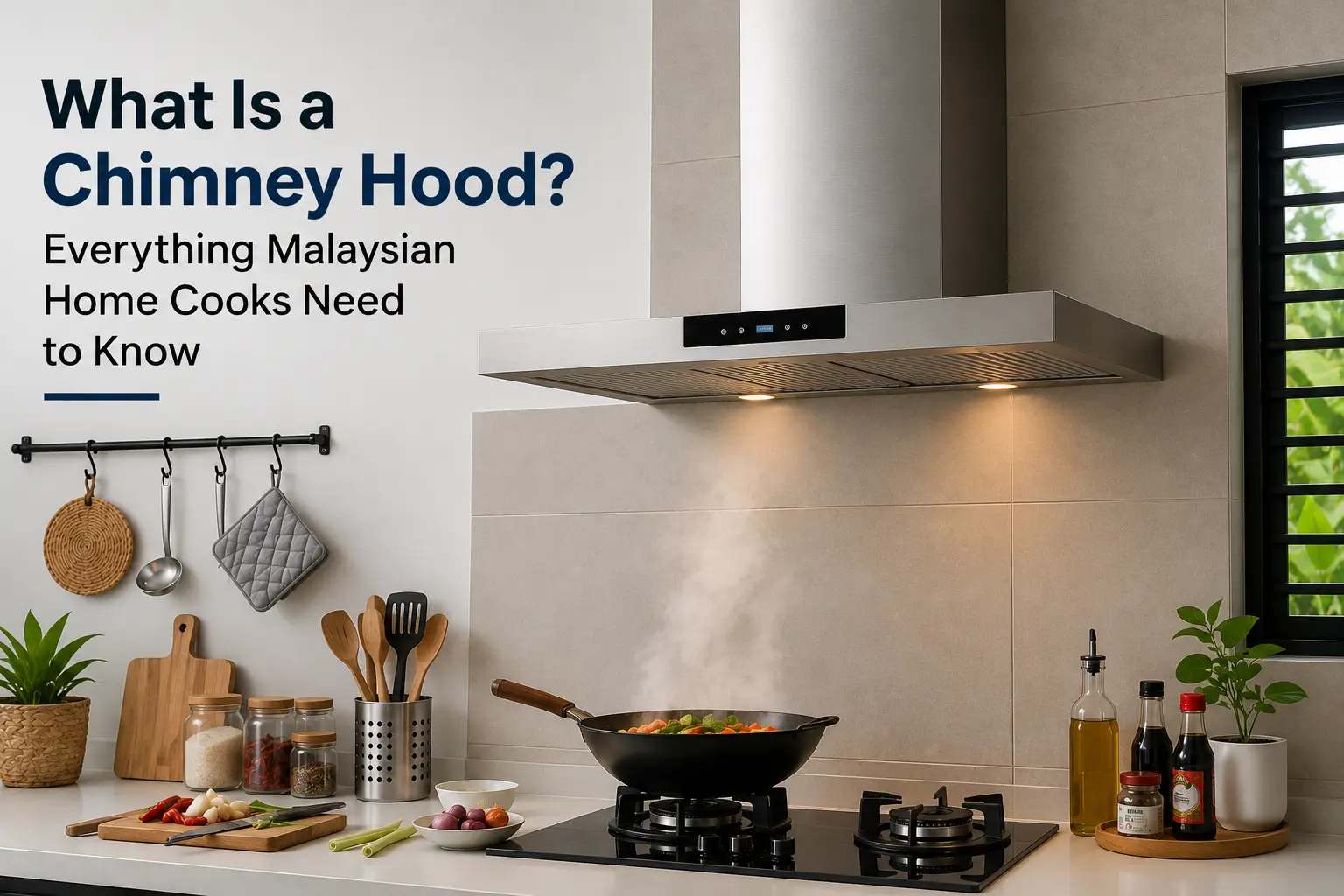
If you have ever stir fried beef with black pepper or deep fried ikan bilis at home, you already know the problem. Cooking in a Malaysian kitchen produces a lot of smoke, oil, and aroma . Without proper ventilation, that mess settles on your cabinets, your walls, and eventually your lungs. This is where a chimney hood comes in. It is the most popular type of kitchen hood you will find in Malaysian homes, but if you are buying one for the first time, the technical specs and design choices can feel overwhelming. In this guide, we will break down what a chimney hood actually is , how it works, the main types you can choose from, and how to pick the right one for your kitchen.
Quick Answer: How to Measure the Suction Power of a Kitchen Hood?
A chimney hood is a wall mounted or island mounted kitchen extractor with a vertical chimney sleeve that pulls smoke, steam, and grease away from your cooktop and channels them up and out of the kitchen. It works using a motor, grease filters, and ducting , and is the most popular hood type in Malaysia because it pairs powerful extraction (often 1500 to 2500 m³/h ) with a striking visual presence above the hob.
What Is a Chimney Hood and How Does It Work?
A chimney hood (sometimes called a chimney cooker hood or chimney range hood) is a ventilation appliance installed above your hob. It draws in cooking fumes, traps grease in its filters, and either vents the air outside through a duct or recirculates it back into the kitchen after filtering. The name comes from its distinctive shape: a wide canopy that captures smoke at the bottom, narrowing into a tall vertical chimney sleeve that runs up toward the ceiling.
Visually, a chimney hood is the kitchen hood you probably picture when someone says “range hood.” Unlike a slim hood (which tucks under a cabinet and stays out of sight) or a slanted hood (which tilts forward at an angle), a chimney hood is meant to be seen. It announces itself as a centrepiece above your cooking zone, often finished in stainless steel, tempered black glass, or a combination of both. You can browse the full range of Vatti kitchen hoods to see how different styles compare side by side.
How Does a Chimney Hood Work?
A chimney hood looks like a simple appliance, but four key parts work together to keep your kitchen air clean:
- The motor. Hidden inside the top of the hood, the motor spins a fan that creates suction. Premium models use Brushless Direct Current (BLDC) motors for stronger, quieter performance with better long term durability.
- The grease filters. These metal mesh layers (sometimes baffle filters) sit at the bottom of the canopy. As cooking fumes are pulled in, the filters trap oil and grease particles so they do not coat your duct or motor.
- The ducting. A pipe (usually 150mm in diameter ) carries the filtered air either through an exterior wall (ducted) or back into the kitchen after a second round of filtration (recirculating).
- The controls. Modern chimney hoods come with touch panels, hand wave sensors, auto clean cycles, and even app integration. These let you change fan speeds or trigger a deep clean without touching greasy buttons mid cook.
Two technical specs matter most when judging how well a chimney hood works. Airflow , measured in cubic metres per hour (m³/h), tells you how much air the hood can move. Air pressure , measured in Pascals (Pa), tells you how forcefully it can push that air through long or twisty ducting. For Malaysian wok cooking, both numbers matter, especially in high rise condos with shared service shafts.
Main Types of Chimney Hoods
Not all chimney hoods look the same. While they all share the basic canopy plus vertical sleeve structure, the shape and mounting style can vary widely. Here are the main types you will encounter in Malaysia:
- Wall mounted chimney hood. The most common style. Installed flush against a wall, directly above the hob. Best suited for kitchens where the cooktop sits along a wall.
- T-shape chimney hood. A flatter, wider canopy that resembles the letter T when viewed from the front. Offers a sleek, contemporary look and very strong extraction across the full width of the hob.
- Slim chimney hood. A compact, narrow profile version of the wall mounted style. Designed for condos and smaller kitchens where space is tight but you still want reliable extraction.
- Lifting chimney hood. A premium style where the lower canopy lifts upward to expand the smoke capture area, then retracts when not in use. Great for heavy duty Asian cooking with intense wok smoke.
- Island chimney hood. Suspended from the ceiling above a kitchen island. Used when the cooktop is not against a wall. Requires careful planning for ducting and ceiling reinforcement.
Each style has its place. The Vatti Aetheris V929 is a strong example of a modern wall mounted chimney with PM2.5 air purification, while the Vatti Triple Intake T-Type V937 showcases the T-shape design with low noise performance. For tight condo kitchens, the Vatti Slim Series V996 fits where a full size unit would not, and the Vatti Athena Lifting V991 is built for households that cook heavily every day.
Ducted vs Recirculating Chimney Hoods
Every chimney hood falls into one of two categories based on what it does with the air it captures: ducted or recirculating.
A ducted chimney hood vents air outside the home through a duct that runs from the hood through an exterior wall (or up through the ceiling in landed homes). It is the more effective setup because the smoke, grease, and odours leave your home entirely. This is the recommended choice when external venting is possible and when you cook heavily with high heat.
A recirculating (ductless) chimney hood filters the air through an active charcoal filter and pushes it back into the kitchen. No external duct is needed. This makes it easier to install, especially in apartments and condominiums where ducting through exterior walls is not allowed by management. The trade off is that odours and moisture are not fully removed , and the charcoal filters need replacement every six to twelve months.
If you want a deeper comparison before deciding which fits your home, the ducted vs ductless range hood guide breaks down installation, performance, and cost differences in more detail.
Benefits of a Chimney Hood for Malaysian Kitchens
Why has the chimney hood become the default choice in Malaysian homes? It comes down to how well it handles the specific demands of local cooking and our tropical climate:
- Powerful suction for wok cooking. High heat stir frying, deep frying, and grilling produce intense, oily smoke that can overwhelm weaker hoods. Chimney hoods are designed to handle this volume head on.
- Protects cabinets and walls from grease. Without strong extraction, cooking oil settles on every surface within reach. Over time, that grease layer is almost impossible to remove. A good chimney hood captures it before it spreads.
- Improves indoor air quality. Cooking fumes are linked to respiratory issues over time. Premium models add PM2.5 purification to capture fine particles that ordinary filters miss.
- Eliminates lingering food smells. Sambal, curry, and grilled fish leave aromas that hang in the air for hours. Combined with Malaysia’s humidity, those smells settle into fabrics and furniture. A chimney hood draws them out before they spread.
- Doubles as a design statement. Modern chimney hoods are finished in brushed stainless steel or black tempered glass. They become a visual anchor for the kitchen, not just an appliance.
How to Choose the Right Chimney Hood?
Once you understand what a chimney hood is, the next question is which one to buy. These are the criteria that matter most:
- Width. Match the hood to your hob. Most Malaysian kitchens use a 90cm hob, so a 90cm hood is the standard pairing. A narrower hood lets smoke escape from the sides.
- Suction power (m³/h). Look for at least 1500 m³/h for daily wok cooking . Premium models reach 2000 to 2500 m³/h, which gives extra capacity for heavy cooking sessions.
- Air pressure (Pa). Especially important in high rise condos. Hoods with up to 1300Pa can push smoke through long shared ducting without losing power.
- Noise level (dB). Aim for hoods that run between 46 and 54dB. Anything above 65dB will feel intrusive, especially in open plan kitchens.
- Filter type and cleaning features. Look for dishwasher safe filters and auto clean functions (such as high pressure steam wash or heat clean) to reduce manual maintenance.
- Smart features. Hand wave sensors, gesture control, and app connectivity are no longer luxuries. They make a real difference when your hands are oily mid cook.
- Ducting compatibility. Confirm whether your home supports ducted installation. Condos often have specific rules about shared service shafts.
For a full overview of available specifications and models, browse the Vatti chimney hood range in Malaysia . It is the easiest way to compare suction, design, and smart features in one place.
Chimney Hood vs Slim Hood vs Slanted Hood: Which Should You Pick?
If you are still weighing your options between hood styles, here is a quick side by side comparison to help you decide:
| Feature | Chimney Hood | Slim Hood | Slanted Hood |
|---|---|---|---|
| Best for | Heavy wok cooking, statement design | Small kitchens, condos | Low ceiling kitchens, modern design |
| Visual style | Tall, vertical, eye catching | Compact, tucks under cabinet | Angled, contemporary |
| Suction power | High to very high | Moderate | High |
| Space needed | High ceiling clearance | Minimal | Moderate |
| Typical use case | Most Malaysian homes | Apartments and studios | Modern open plan kitchens |
For most Malaysian households, a chimney hood remains the most practical and visually rewarding choice . It is built for the kind of cooking we actually do at home, and the design simply works in both contemporary and traditional kitchen layouts.
Final thoughts
If you are still not sure which model suits your space, our team is happy to walk you through the options. Message us on WhatsApp for a free consultation or a product recommendation tailored to your kitchen.


